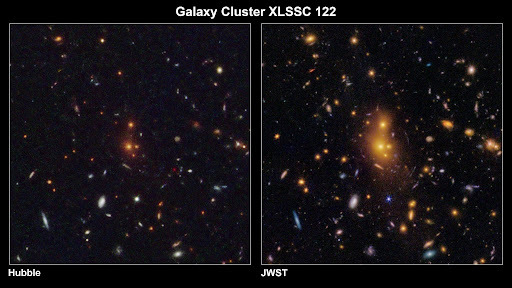
Using the James Webb Space Telescope, astronomers have spotted a massive and densely packed galaxy cluster at “cosmic noon” before such structures were thought to be possible.

A bizarre “bow-and-arrow” radio galaxy nearly 1.8 million light-years across could reveal how galaxy clusters sculpt some of the universe’s largest structures.
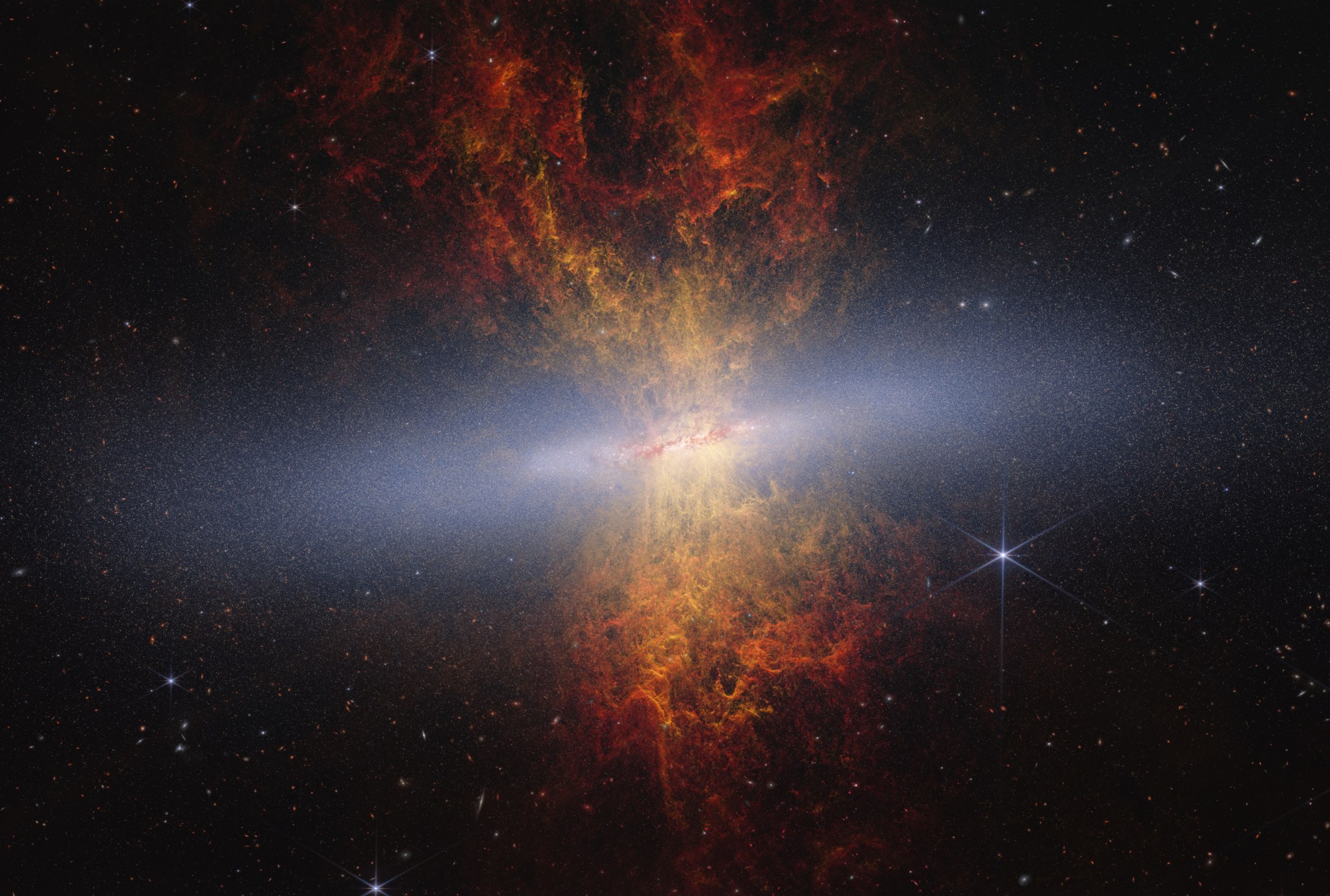
NASA’s James Webb Space Telescope recently observed edge-on starburst galaxy Messier 82 (M82), nicknamed the Cigar Galaxy. Webb’s new view of M82, added to archival data from NASA’s Hubble Space Telescope, gives us a more complete picture of this starburst galaxy. Because Webb can see infrared light, it is able to peer through clouds of […]
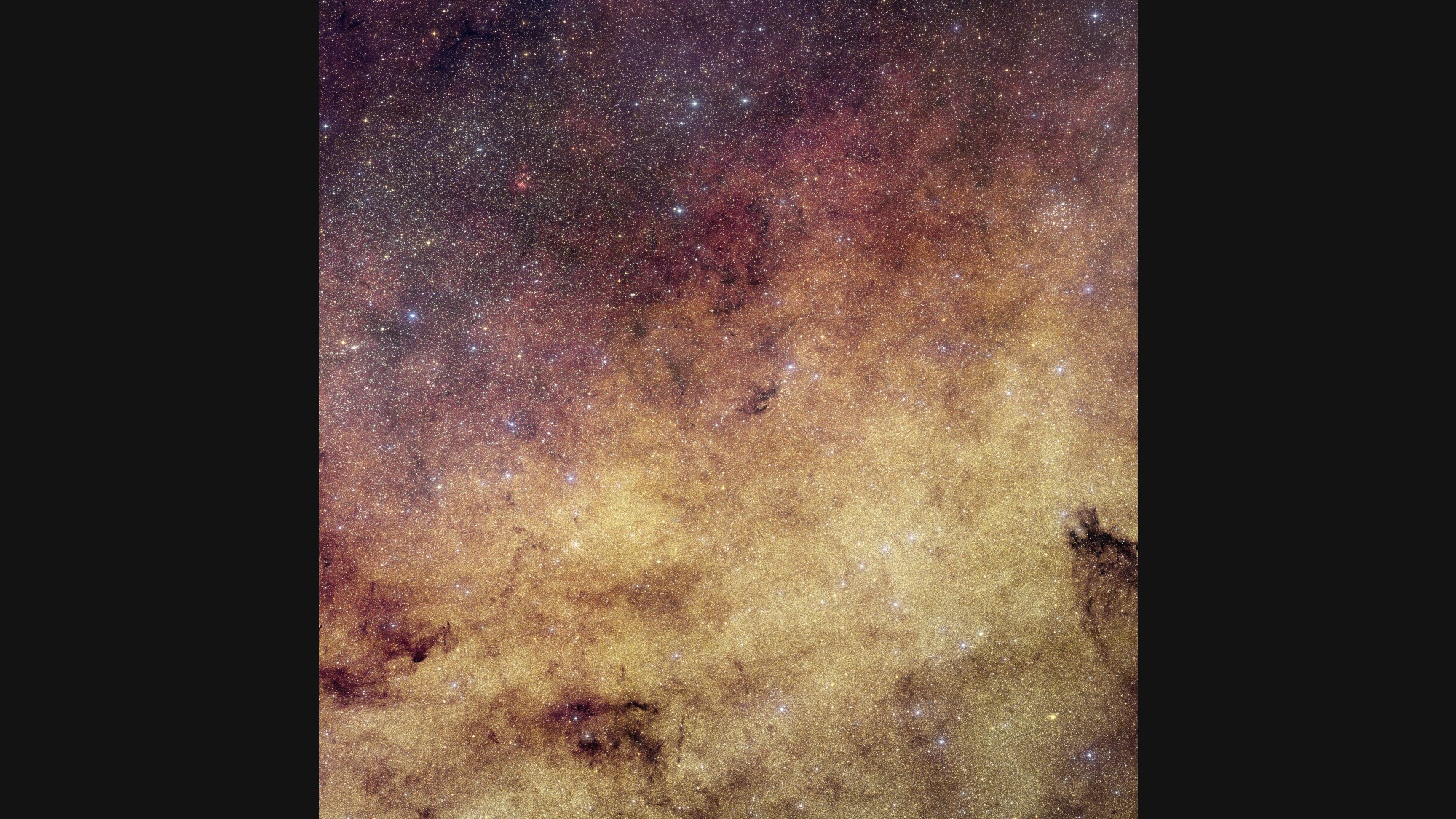
The ESA’s dark universe detective spacecraft Euclid, has studied the heart of the Milky Way, creating the largest and most detailed photo of this region ever made.

Astronomers using NASA’s Hubble Space Telescope have found something they never expected — ultraviolet light from a galaxy that existed just 1.4 billion years after the big bang.

Located 12 million light-years away and undergoing rapid star formation, edge-on spiral galaxy Messier 82 (M82) is a scientifically unique sight to behold, and now NASA’s James Webb Space Telescope has revealed previously unseen details. M82’s intense star formation, thought to be the result of a galaxy merger, will be a short-lived event in astronomical […]
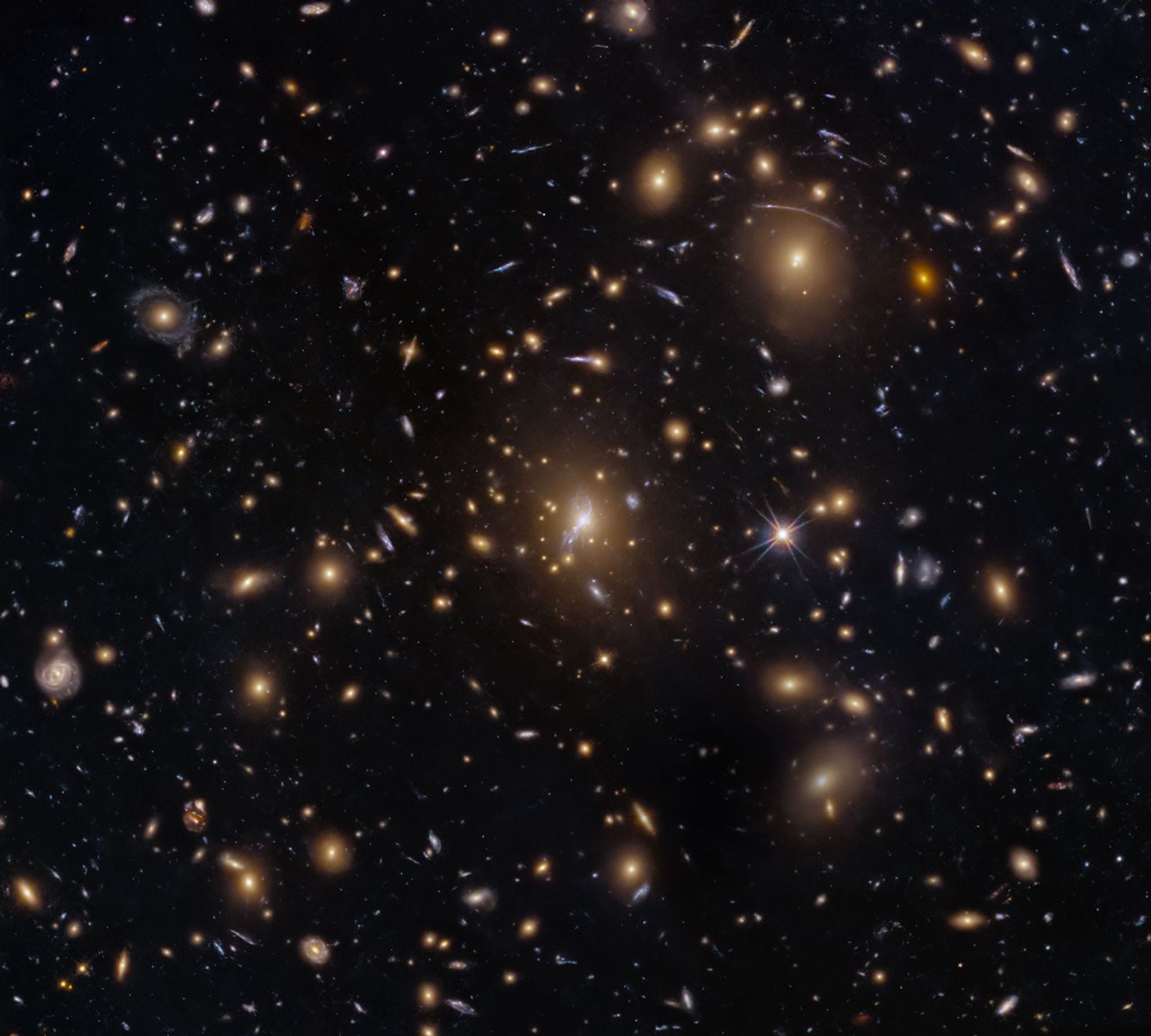
Looking somewhat like a swarm of bees returning to their hive, this NASA Hubble Space Telescope image features the galaxy cluster MACS0329-0211.
A “galaxy-killing” wind driven by cosmic mergers may explain why many massive galaxies in the early universe stopped forming stars far earlier than expected, according to new JWST and ALMA observations.
…
Above a certain threshold, galaxies stop growing , no matter how much raw material they have on hand. The question is: what flips the switch?
…
The Magellanic Clouds are a pair of dwarf galaxies passing the Milky Way probably for the first time, but as they move they have been interacting with each other for billions of years.
…