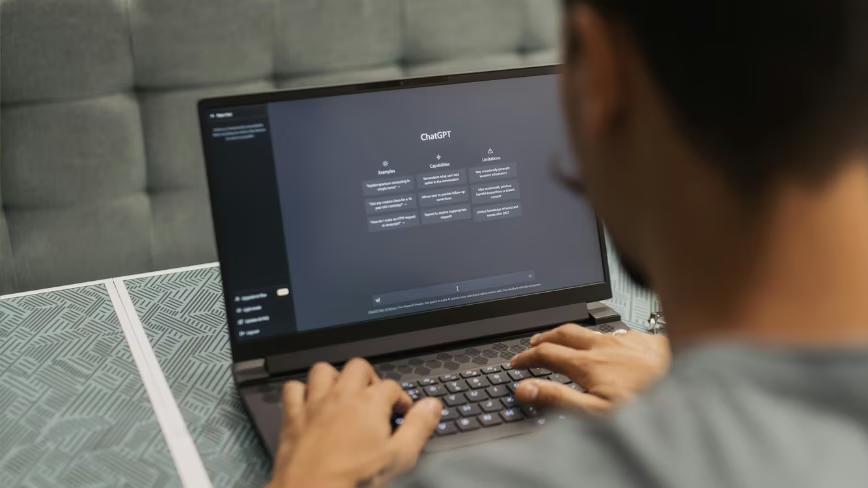
Scott Winters says he trusted ChatGPT with his health, and it nearly cost him his life. The 55-year-old Florida pastor is suing OpenAI in San Francisco. He alleges the chatbot gave him dangerously wrong medical advice and talked him out of seeking care…
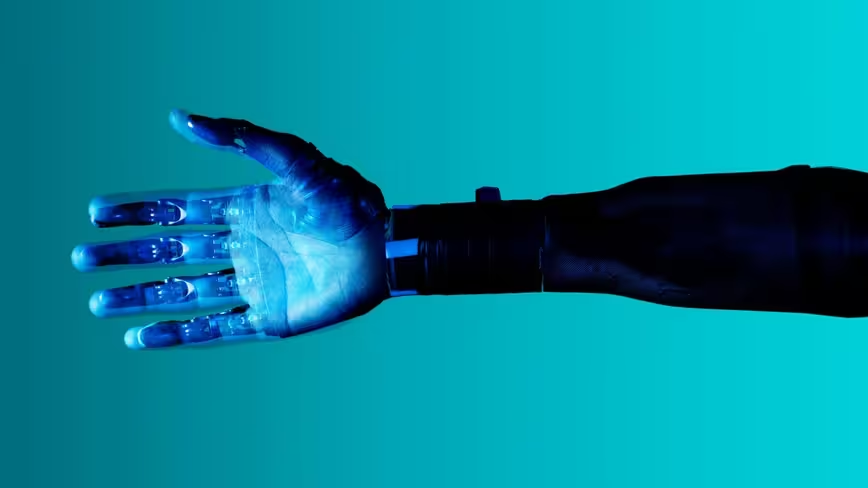
The hard part of medical robotics is not the robot. It is the practice. A surgical system needs thousands of attempts to learn a delicate task, and you cannot run those on real patients. Nvidia thinks the answer is to let the robot rehearse inside a si…

Search for requirements management tools for medical device development and you’ll find plenty of content arguing that the established platforms are too heavy for modern teams. Much of it comes from vendors with a stake in that conclusion. In a regulat…
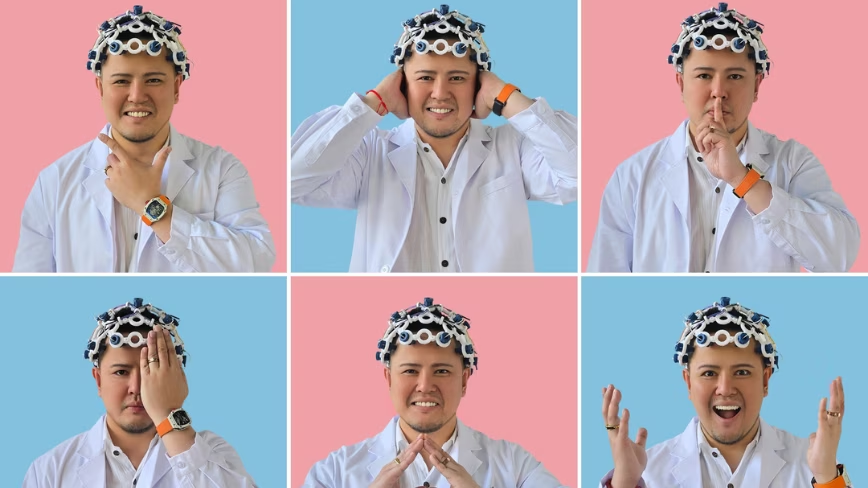
As BCIs move from laboratories towards commercial use, Neurochip.com founder Herbert Sim warns that unequal access could separate people not only by income or connectivity, but by physical and cognitive capability. At the 2026 World Artificial Intellig…
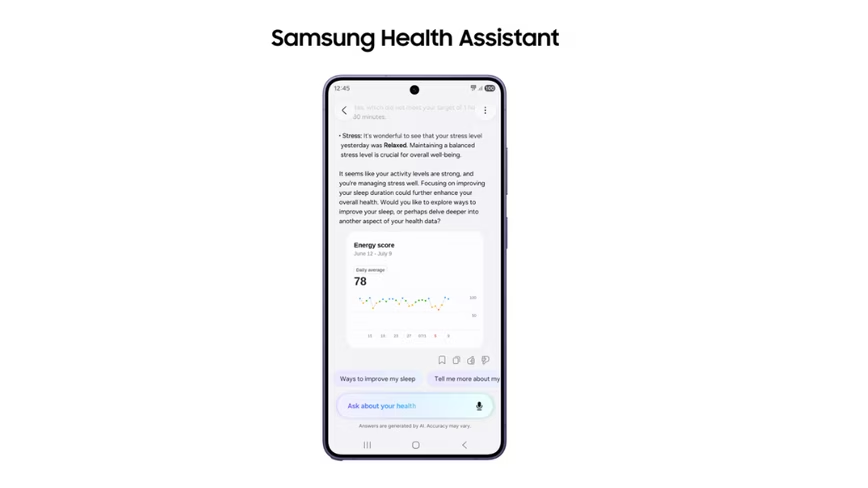
Samsung has started rolling out a beta version of Samsung Health Assistant, which it calls a fully integrated, AI-powered personal health assistant built into the Samsung Health app. According to the company, the feature is live for eligible users in t…

Raidium, a Paris and Silicon Valley-based radiology startup, has launched its AI-native imaging platform in the US at Moffitt Cancer Center, one of the country’s leading oncology research institutions. The platform, called Raidium Read, replaced Moffit…
A healthcare AI startup has raised fresh funding to push AI agents deeper into hospital operations. Bunkerhill Health closed a Series B led by Khosla Ventures, bringing total funding to $55m, HIT Consultant reports. The pitch is a platform, not a produ…
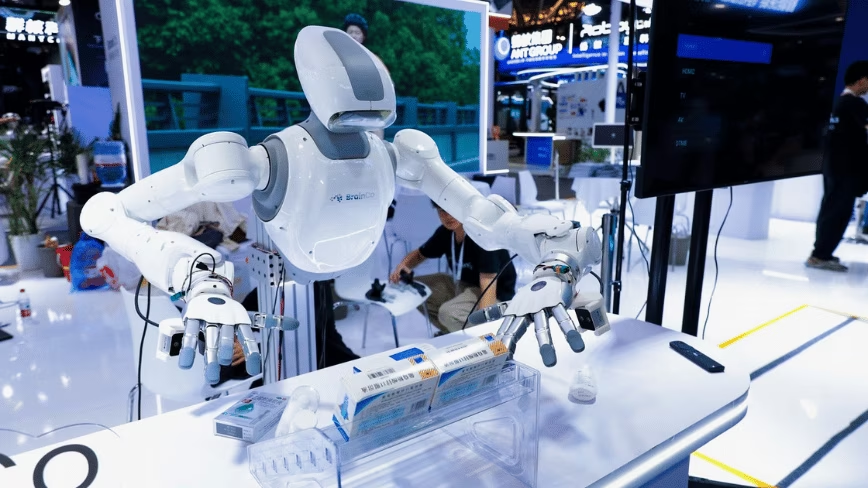
Picture a lightweight headset. You think about picking up a cup, and a robot arm reaches out and does it. No button, no voice command, no movement. BrainCo drew crowds with that demo at the World AI Conference (WAIC) in Shanghai, the South China Mornin…
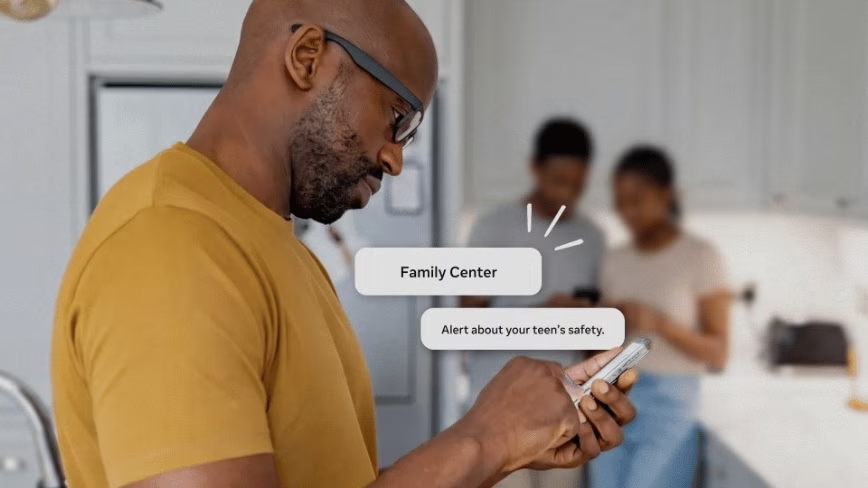
Meta will start telling parents when a teenager discusses suicide or self-harm with its Meta AI chatbot. The company set out the change in a blog post on Thursday. The alerts go to parents who use Instagram supervision tools. They are live now in the U…
Google DeepMind has launched a programme to turn AI on biological threats. The London lab and its sister company Isomorphic Labs call it bioresilience, and set it out in a joint blog post. The aim is twofold. DeepMind wants to stop people misusing its …