“We studied the last several orbits before the merger, when the entwined magnetic fields undergo rapid and dramatic changes, and modeled potentially observable high-energy signals.”
…
When young stars mix with neutron stars, things get messy.
NASA has released its monthly skywatching update on what to look out for over the coming weeks, and you can probably guess which event tops the list. That’s right: the Artemis II mission. NASA is about to launch a crew on a voyage around the moon in wh…
“Stars like the sun don’t just stop shining for no reason.”
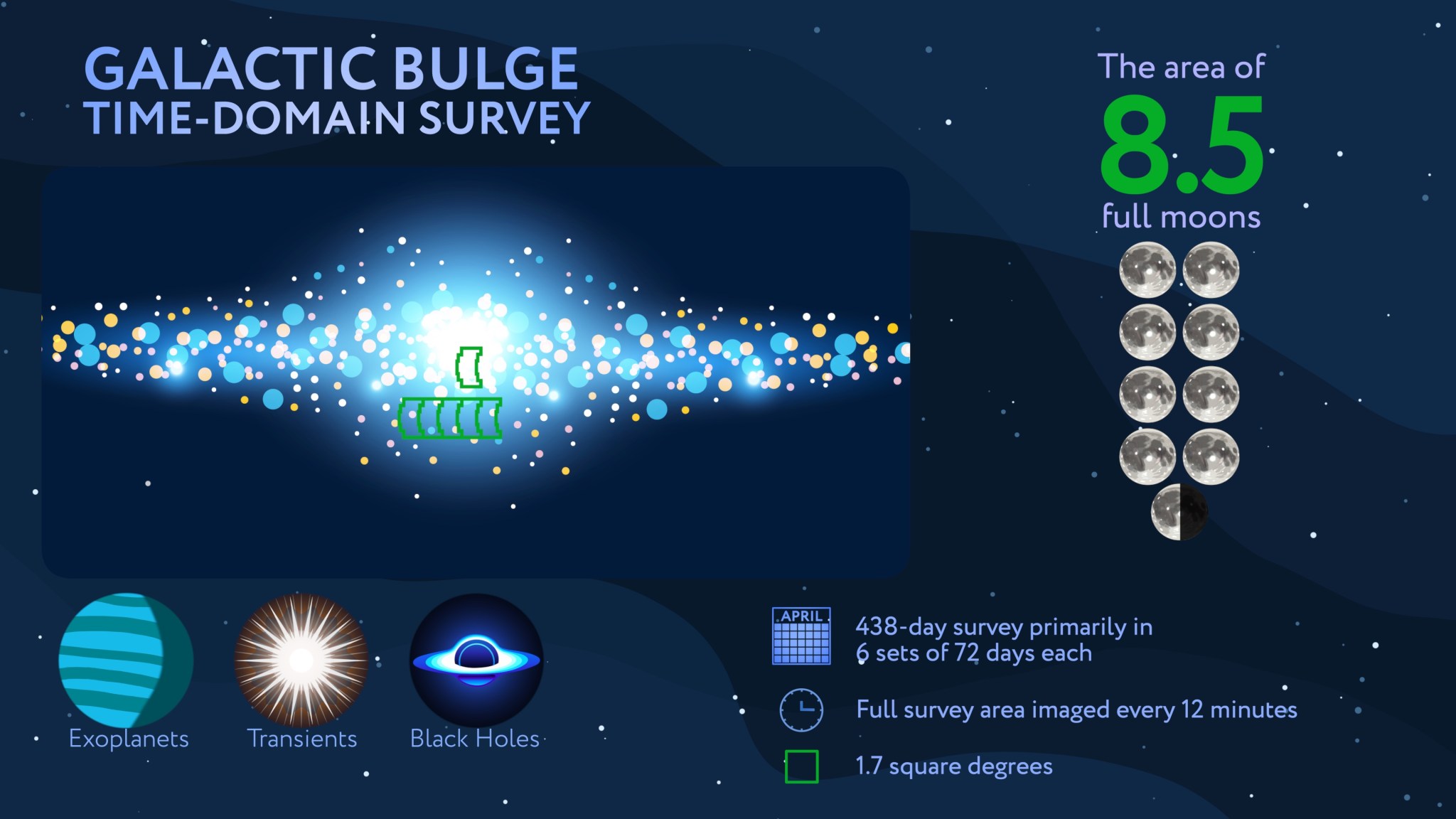
At the heart of our own galaxy, there is a dense thicket of stars with a supermassive black hole at the very center. NASA’s Nancy Grace Roman Space Telescope will provide the deepest-ever view of this zone, revealing stars, planets, and unique objects that resist definition. Based on the input of astronomers from across the […]
Jan. 23, 2026 NASA’s TESS Returns to Science Observations NASA’s TESS (Transiting Exoplanet Survey Satellite) entered safe mode Jan. 15 and returned to normal science operations Jan. 18. The operations team determined the issue arose when TESS slewed to point at a target, but its solar panels did not rotate to remain pointed at the […]
“Until now, it was unknown what type of star would remain after the merger.”
The Core And Filament Formation/Evolution In Natal Environments (CAFFEINE) survey is an “astronomer’s best friend,” according to the European Southern Observatory.
…

Astronomers have long sought evidence to explain why comets at the outskirts of our own solar system contain crystalline silicates, since crystals require intense heat to form and these “dirty snowballs” spend most of their time in the ultracold Kuiper Belt and Oort Cloud. Now, looking outside our solar system, NASA’s James Webb Space Telescope […]
“One thing popped out as clear as anything, this previously unknown ‘bar’ of ionized iron atoms, in the middle of the familiar and iconic ring.”
…