An emerging phishing campaign is targeting job seekers by masquerading as Google Careers recruiters, delivering seemingly legitimate emails that lead victims to malicious sites designed to harvest Gmail credentials. Security researchers have uncovered a sophisticated multi-stage attack that leverages Salesforce infrastructure, Cloudflare protection and WebSocket command-and-control to manipulate victims into surrendering sensitive information. The phishing […]
Security researchers are observing a significant increase in internet-wide scans targeting the critical PAN-OS GlobalProtect vulnerability (CVE-2024-3400).
Exploit attempts have surged as attackers seek to leverage an arbitrary file creation flaw to achieve OS command injection and ultimately full root code execution on vulnerable firewalls.
Exploitation of Critical PAN-OS SSL VPN Flaw (CVE-2024-3400)
Since late September 2025, honeypots deployed globally have logged thousands of TCP connections probing PAN-OS SSL VPN portals.
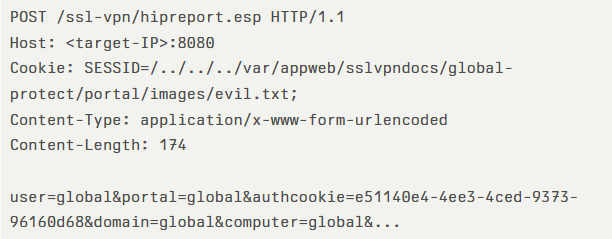
SANS Technology Institute observed that one prominent source IP, 141.98.82.26, has repeatedly issued malicious POST requests to the /ssl-vpn/hipreport.esp endpoint, exploiting the lack of session ID validation. The attacker supplies a crafted Cookie header:
If the upload succeeds, a follow-up GET request for /global-protect/portal/images/evil.txt will return HTTP/403, confirming file presence.
Attackers then pivot file placement to directories, allowing command execution. These automated scans reflect the high CVSS 10.0 severity and network-accessible, unauthenticated attack vector of CVE-2024-3400.
Risk Factors
Details
Affected Products
PAN-OS 10.2 versions before 10.2.9-h1, 11.0 versions before 11.0.4-h1, 11.1 versions before 11.1.2-h3 (with GlobalProtect gateway or portal enabled)
Impact
Arbitrary file creation leading to OS command injection and root code execution
Exploit Prerequisites
None (network-accessible, unauthenticated)
CVSS 3.1 Score
10. 0 (Critical)
Mitigations
Palo Alto Networks has released fixed PAN-OS versions—10.2.9-h1, 11.0.4-h1, 11.1.2-h3—and new hotfixes for affected branches.
An immediate upgrade is strongly advised to thwart ongoing exploitation. Administrators can also deploy Threat Prevention signatures 95187, 95189, and 95191 to block the initial arbitrary file creation interaction at the GlobalProtect interface.
For detection, operators should grep GPSvc logs for anomalous session ID strings:
Legitimate GUID patterns appear as hex-digit groups; any file-system path or shell snippet between sessions ( and ) indicates exploitation attempts.
A timeline of updates shows that enhanced factory reset (EFR) procedures and CLI commands for evidence collection were published between April and May 2024, underscoring the ongoing remediation efforts.
Cloud NGFW and Prisma Access customers are not affected; only on-premises PAN-OS 10.2–11.1 devices with GlobalProtect gateway or portal enabled are at risk.
Organizations should verify configuration via the firewall GUI under Network > GlobalProtect > Gateways/Portals and audit for unauthorized files in /var/appweb/sslvpndocs.
As threat actors continue to weaponize CVE-2024-3400, vigilant patch management, proactive log inspection, and robust Threat Prevention enforcement remain critical to defend against unauthorized root-level access.
Cybersecurity researchers have disclosed three now-patched security vulnerabilities impacting Google’s Gemini artificial intelligence (AI) assistant that, if successfully exploited, could have exposed users to major privacy risks and data theft.
“They made Gemini vulnerable to search-injection attacks on its Search Personalization Model; log-to-prompt injection attacks against Gemini Cloud
Linux Torvalds has announced the release of Linux Kernel 6.17, a new version focused on stability and incremental improvements rather than groundbreaking features. The update brings a host of bug fixes, security enhancements, and driver updates across various subsystems.
In his release message, Torvalds described the final week of development as having “no huge surprises,” which he considers a positive indicator of a smooth release cycle.
A notable fix for the Bluetooth subsystem is the most significant change in the last week. This patch addresses locking issues that could lead to race conditions and use-after-free (UAF) vulnerabilities, which are critical memory safety flaws.
Linux 6.17 Security and Stability Fixes
While the overall release was quiet, version 6.17 includes several important fixes that bolster the kernel’s security and reliability.
Bluetooth Vulnerabilities: Multiple patches were merged to resolve UAF bugs in the Bluetooth stack, including in the HCI (Host Controller Interface) and MGMT (Management) layers. These fixes prevent potential system crashes or security exploits related to device connections and advertising.
Virtualization and I/O: The vhost-net driver, essential for high-performance virtualized networking, received fixes to correct busy-polling behavior. Additionally, the iommufd subsystem, which provides userspace access to I/O Memory Management Units, was patched to fix race conditions during memory mapping.
Core Kernel: Fixes were applied to the futex (Fast Userspace Mutex) implementation to prevent a use-after-free condition during requeue operations, improving the robustness of a core synchronization mechanism.
Networking: The xfrm subsystem, which handles IPsec configurations, was updated to prevent the allocation of a zero-value Security Parameter Index (SPI) and to fix offloading for certain tunnels.
As with any kernel release, version 6.17 incorporates a broad range of updates for hardware drivers and core subsystems. The shortlog reveals contributions affecting numerous components.
Graphics Drivers: Updates were made to the Direct Rendering Manager (DRM) drivers for AMD, Intel (Xe), and Panthor GPUs.
Networking: Various networking drivers saw improvements, including those for Mellanox, Intel (i40e), and Broadcom hardware. Multiple CAN (Controller Area Network) bus drivers were also updated to prevent potential buffer overflows.
Filesystems and Storage: The Btrfs filesystem received a fix for zoned devices, and the core block layer was improved to handle devices with zero sectors correctly.
Platform Support: Patches were added to improve support for various ARM-based SoCs from Rockchip, Marvell, and Allwinner, as well as for x86 platforms from Dell and LG.
With this release finalized, the merge window for Linux 6.18 is now open. Torvalds noted that he has already received dozens of pull requests, indicating that the development community is already hard at work on the next version of the kernel.
The monitoring and analysis of vulnerability exploitations are among the primary responsibilities of Sekoia.io’s Threat Detection & Research (TDR) team. Using honeypots, the team monitors traffic targeting edge devices and internet-facing applications. On 22 July 2025, suspicious network traces appeared in our honeypots, reveals that a cellular router’s API was exploited to deliver smishing campaigns […]
Microsoft on Tuesday unveiled the expansion of its Sentinel Security Incidents and Event Management solution (SIEM) as a unified agentic platform with the general availability of the Sentinel data lake.
In addition, the tech giant said it’s also releasing a public preview of Sentinel Graph and Sentinel Model Context Protocol (MCP) server.
“With graph-based context, semantic access, and agentic
A security vulnerability in Tesla’s Telematics Control Unit (TCU) allowed attackers with physical access to bypass security measures and gain full root-level code execution.
The flaw stemmed from an incomplete lockdown of the Android Debug Bridge (ADB) on an external Micro USB port, enabling a physically present attacker to compromise the vehicle’s TCU. Tesla has since patched the vulnerability via an over-the-air (OTA) software update.
According to NCC Group, the vulnerability was present in Tesla firmware version v12 (2025.2.6). While Tesla implemented logic to block direct shell access via adb shell on production devices, researchers discovered this lockdown was insufficient.
It failed to prevent two critical ADB features: the ability to read and write files as the root user, using adb pull and adb push, and the ability to forward network traffic with adb forward.
Since the ADB process (adbd) on the TCU runs with root privileges, these oversights created a powerful attack vector.
Tesla’s Telematics Control Unit Vulnerability
An attacker could exploit this flaw by physically connecting a device to the TCU’s exposed Micro USB port. The attack involved several steps:
Upload a Payload: The attacker would use the adb push command to upload a malicious executable script to a writable directory on the TCU, such as /tmp.
Trigger Execution: The attacker would then abuse the kernel’s uevent_helper subsystem. By writing the path of their malicious script to the uevent_helper file, they could trick the kernel into executing it with root privileges when a system event was triggered.
Gain Access: A simple action like reading a file with adb pull was enough to trigger a uevent, causing the malicious script to run. In the proof-of-concept, the script started a Telnet server, which the attacker could then connect to using a port forwarded via adb forward, granting them a root shell on the device.
The impact of this vulnerability is severe, as gaining root access on the TCU gives an attacker complete control over that component. While the attack requires physical access, a compromised TCU could potentially serve as a pivot point for further attacks on the vehicle’s internal network.
The vulnerability was responsibly disclosed to Tesla on March 3, 2025. Tesla acknowledged the report the following day and began rolling out a patch in firmware version 2025.14 on April 24, 2025.
The fix resolves the issue by completely disabling the ADB interface on the Micro USB port for production vehicles, ensuring it can no longer be used as an attack vector.
The public advisory was released by NCC Group on September 29, 2025, after the patch was widely deployed. This incident highlights the ongoing efforts by security researchers to probe automotive systems and the effectiveness of Tesla’s OTA update mechanism in rapidly deploying security fixes to its fleet.
Japanese beer and beverage giant Asahi Group Holdings has been forced to halt production at its domestic factories as a result of a cyberattack that struck on Monday. Asahi, known for its popular brands such as Asahi Super Dry Beer, Nikka Whisky, and Mitsuya Cider, has yet to resume operations across its network of 30 […]
In late August 2025, Cleafy’s Threat Intelligence team uncovered Klopatra, a new, highly sophisticated Android banking trojan and Remote Access Trojan (RAT) that grants attackers full control of compromised devices and facilitates large-scale financial fraud. Active campaigns in Spain and Italy have already infected over 3,000 devices, targeting users of major financial institutions and draining […]
Lunar Spider, a newly observed malware strain, has emerged as a potent threat to Windows environments by compromising systems in a single click.
First detected in mid-September 2025, its operators have quickly refined delivery and payload strategies to evade traditional defenses.
Initial reports show that victims receive a seemingly innocuous link via phishing emails or instant-messaging platforms. Once clicked, Lunar Spider initiates a stealthy download of its core components, leveraging legitimate Windows utilities to blend in with normal system activity.
Within minutes, the malware establishes a foothold, scans for active user sessions, and proceeds to harvest stored credentials—without any visible signs of compromise.
Researchers at The DFIR Report identified Lunar Spider after encountering unusual Microsoft Credential Manager API calls on several corporate endpoints.
Initial analysis revealed that the malware uses Windows BITS (Background Intelligent Transfer Service) to fetch additional modules from its command-and-control (C2) servers.
This maneuver not only obscures network traffic but also prevents many endpoint detection systems from flagging the download. Once the core binary is in place, Lunar Spider executes a lightweight loader written in PowerShell, launching secondary payloads directly in memory.
This file-less approach significantly reduces forensic artifacts on disk, complicating incident response efforts.
Execution
The impact of Lunar Spider’s campaign has been profound. Affected organizations report unauthorized access to internal dashboards and email accounts, followed by targeted phishing campaigns from compromised mailboxes.
In some cases, attackers have leveraged stolen credentials to move laterally across networks, exfiltrating sensitive documents and financial records.
Security teams have struggled to isolate the infection due to Lunar Spider’s minimal footprint and its use of legitimate Windows processes.
Execution chain (Source – The DFIR Report)
A closer look at Lunar Spider’s infection mechanism reveals a sophisticated one-click compromise workflow.
Upon link activation, a short batch script executes via mshta.exe, invoking an obfuscated PowerShell command that downloads the core payload.
The script then injects the payload into a suspended svchost.exe process using Windows API calls, such as CreateProcess and WriteProcessMemory, before resuming execution.
This injection technique conceals the malicious code under the guise of a trusted service host, thereby evading many heuristic-based scanners.
Once in memory, the injected payload locates and extracts credentials stored by Windows Credential Manager, using the following snippet to interface with native APIs:
This approach allows Lunar Spider to harvest a wide array of credentials—ranging from RDP and VPN logins to saved web and database passwords—within seconds of injection.
In response to this growing threat, organizations are urged to monitor unusual mshta.exe and PowerShell child processes, enforce strict application whitelisting, and segment privilege levels to limit access to Credential Manager data. Enhanced network monitoring for abnormal BITS transfers can also help detect C2 communications early.
As Lunar Spider continues to evolve, defenders must adopt a layered security posture that combines behavioral analytics with robust endpoint controls.
Follow us on Google News, LinkedIn, and X to Get More Instant Updates, Set CSN as a Preferred Source in Google.




.webp)