WhatsApp 0-click remote code execution (RCE) vulnerability affecting Apple’s iOS, macOS, and iPadOS platforms, detailed with a proof of concept demonstration.
The attack chain exploits two distinct vulnerabilities, identified as CVE-2025-55177 and CVE-2025-43300, to compromise a target device without requiring user interaction.
The exploit, demonstrated in a proof-of-concept (PoC) shared by the DarkNavyOrg researchers, is initiated by sending a specially crafted malicious (DNG) image file to a victim’s WhatsApp account.
As a “zero-click” attack, the vulnerability is triggered automatically upon receipt of the malicious message, making it particularly dangerous as victims have no opportunity to prevent the compromise.
0-click Attack PoC WhatsApp
WhatsApp 0-Click Vulnerability Exploit Chain
The attack’s entry point is CVE-2025-55177, a critical logic flaw within WhatsApp’s handling of messages.
According to DarkNavyOrg, the vulnerability stems from a missing validation check to confirm that an incoming message originates from a legitimate linked device.
This oversight allows an attacker to send a message that appears to be from a trusted source, bypassing initial security checks and delivering the malicious payload.
We triggered WhatsApp 0-click on iOS/macOS/iPadOS. CVE-2025-55177 arises from missing validation that the [Redacted] message originates from a linked device, enabling specially crafted DNG parsing that triggers CVE-2025-43300. Analysis of Samsung CVE-2025-21043 is also ongoing. pic.twitter.com/idwZXqh5WK
Once the message is delivered, the second vulnerability, CVE-2025-43300, is triggered. This flaw resides in the application’s DNG file parsing library.
The attacker crafts a malformed DNG image that, when processed by WhatsApp, causes a memory corruption error, leading to remote code execution.
The proof-of-concept shared by the researchers shows a script that automates the process: logging into WhatsApp, generating the malformed DNG, and sending the payload to a target phone number. This combination allows for a seamless and silent compromise of the targeted device.
This zero-click RCE vulnerability poses a severe threat to users of WhatsApp on multiple Apple devices, including iPhones, Mac computers, and iPads.
A successful exploit could grant an attacker complete control over a device, enabling them to access sensitive data, monitor communications, and deploy further malware. The stealthy nature of the attack means a device could be compromised without any visible indicators.
The discovery highlights the ongoing security challenges associated with complex file formats and cross-platform messaging applications. Flaws in file parsers have historically been a common vector for RCE exploits, as they process untrusted external data.
DarkNavyOrg has indicated that its analysis is ongoing, including a separate investigation into a Samsung-related vulnerability (CVE-2025-21043).
For now, WhatsApp users are advised to ensure their applications and operating systems are always updated to the latest versions to receive security patches as soon as they become available. Both WhatsApp and Apple are expected to address these critical vulnerabilities in upcoming security updates.
A critical flaw in SUSE Rancher’s user management module allows privileged users to disrupt administrative access by modifying usernames of other accounts.
Tracked as CVE-2024-58260, this vulnerability affects Rancher Manager versions 2.9.0 through 2.12.1, enabling both username takeover and full lockout of the admin account.
Organizations running unsupported versions are urged to upgrade immediately or apply mitigations to prevent unauthorized disruption of cluster administration.
Rancher RBAC Privilege Escalation
Rancher’s RBAC system relies on unique usernames at login time, but fails to enforce immutability of this field after account creation.
An attacker with update permissions on any user resource can send a crafted request to change the username field of a target account.
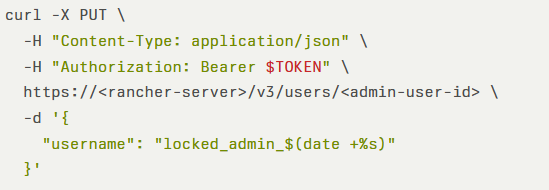
When the admin account is targeted, the attacker’s new, unique identifier takes precedence, and the original admin user can no longer authenticate.Example exploit request using Rancher’s API:
This payload renames the admin account, rendering the genuine administrator unable to log in. The flaw also permits arbitrary renaming of any user, leading to user takeover by assigning a high-privilege username to a malicious account.
– Valid Rancher account with update permission on User API
CVSS 3.1 Score
7.6 (High)
Mitigations
SUSE Rancher has released patched versions that enforce server-side validation on the .username field.
Once set, usernames are immutable, preventing subsequent modification attempts. Affected versions and their patched counterparts include:
2.12.0–2.12.1 → 2.12.2
2.11.0–2.11.5 → 2.11.6
2.10.0–2.10.9 → 2.10.10
2.9.0–2.9.11 → 2.9.12
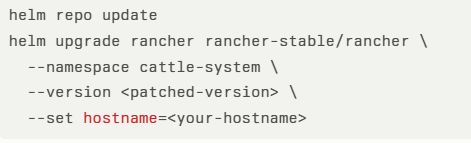
To upgrade, run:
For environments where immediate upgrading is not possible, administrators should audit RBAC policies to limit update permissions on user resources to only fully trusted operators.
Additionally, enable detailed audit logging to detect and respond to suspicious PUT /v3/users API calls.
By addressing this high-severity issue, organizations protect the integrity of their Rancher UI and prevent potential denial-of-service against critical administrative accounts.
Continuous monitoring of global RBAC settings and prompt adoption of security patches remain essential best practices for securing container management platforms.
Singapore, Singapore, September 29th, 2025, CyberNewsWire
Analyzing over 14 billion cyber-attack records daily, ThreatBook ATI is a global solution enriched with granular, local insights; and can offer organizations a truly APAC perspective.
Boasting low false positive rates, the solution is highly compatible with existing security stacks.
ThreatBook ATI provides actionable insights for threat detection and response, enabling organizations to accelerate their intelligence analysis, and make more informed decisions.
ThreatBook, a global leader in cyber threat intelligence, detection and response, today announced the worldwide launch[1] of ThreatBook Advanced Threat Intelligence (“ThreatBook ATI”).
Spearheaded from its offices in Singapore and Hong Kong, the new service offers unique industry insights for threat intelligence platforms (TIPs), security operation centers (SOCs) and cybersecurity analysts globally.
Of note, ThreatBook ATI is able to capture new, difficult-to-detect threats emanating from within Asia, where coverage from many global vendors remains limited. It is also able to better identify Western attackers targeting Asian organizations as well.
ThreatBook ATI’s capabilities are particularly timely, with 34% of cyber-attacks worldwide taking place within the Asia Pacific[2] (APAC).
A further noteworthy feature of ThreatBook ATI are its low false positive rates. ThreatBook’s proprietary intelligence collection systems, which operate globally and in real time, employs dozens of analysis engines to deeply mine enormous raw datasets.
False positives are filtered through AI-based models, followed by cross-verification by professional security analysts. ATI also applies AI to classify and label threat reports, transforming unstructured intelligence into structured insights, and features a built-in assistant that can rapidly correlate data to answer analysts’ questions.
This layered process ensures the intelligence remains highly accurate and reliable. Over 14 billion attack records are identified daily, including over 80 million malicious inbound internet protocols (IPs), more than six billion malware files, over 7,000 high risk vulnerabilities, and more than 600 zero-day vulnerabilities.
“With several billion attack records from all corners of the world analyzed daily, ThreatBook ATI is a truly global solution enriched with granular, local insights,” said Mr. Feng XUE, Chief Executive Officer of ThreatBook.“
We are of the opinion that Asia Pacific-centric threat intelligence matters, as tactics, techniques, and procedures (TTPs), tooling, language, command and control (C&C) infrastructure, and targeting patterns differ by region – and ATI can offer organizations a truly APAC perspective.
We have a track record of exclusive discovery when it comes to cybercriminals, including advanced persistent threat (APT) groups; and at the end of the day, local context quickens threat detection and reduces dwell time.”
Integration with existing security stacks is key. Studies repeatedly find that a single unified platform, which provides a centralized view of cyber risks across the entire organization, is a priority for cybersecurity teams around the world[3].
ThreatBook ATI is highly compatible with existing security stacks. Its output is available in both machine-readable and human-readable formats, making integration straight-forward.
Customer access is hassle-free. For TIPs, ThreatBook ATI can be purchased through platform marketplaces, or can be integrated through feeds or application programming interfaces (APIs).
For SOCs, ThreatBook ATI feeds integrate easily with security information and event management (SIEM) solutions, firewalls and other security tools. While for cybersecurity analysts, ThreatBook ATI is accessible globally via a web portal.
“High quality threat intelligence enhances existing security tools, which often rely on vulnerable rule-based signals, making them more reliable and accurate, and leading to less false positives across the stack,” added Mr. Xue.
“By providing actionable insights for threat detection and response, organizations are able to accelerate their intelligence analysis, and make more informed decisions to better manage today’s myriad of cyber risks.”
ThreatBook ATI is a timely addition to the company’s acclaimed suite of cybersecurity solutions.
Since 2015, thousands of enterprise organizations globally have placed their trust in Threatbook across the entire threat lifecycle — from detection to analysis, response and protection; all powered by the company’s proprietary intelligence core.
In both instances, ThreatBook was one of a limited number of vendors recognized.
About ThreatBook
ThreatBook is a global cybersecurity company specializing in advanced threat intelligence, detection, and response. Founded in 2015, ThreatBook equips enterprises, governments, and service providers with the clarity and context needed to defend against evolving digital risks.
By combining artificial intelligence with deep threat intelligence, ThreatBook delivers real-time visibility, hyper-accurate detections, and early-warning insights against nation-state actors, cybercriminal groups, and emerging attack campaigns.
With unique vantage points from across the Asia Pacific region and beyond, ThreatBook provides intelligence coverage that bridges Eastern and Western threat landscapes, offering an unmatched perspective for global defenders.
ThreatBook: Act with Intelligence that Matters. To learn more, users can visit www.threatbook.io or follow them on LinkedIn.
[1] ThreatBook ATI is not available in mainland China.
Singapore, Singapore, September 29th, 2025, CyberNewsWire ThreatBook, a global leader in cyber threat intelligence, detection and response, today announced the worldwide launch[1] of ThreatBook Advanced Threat Intelligence (“ThreatBook ATI”). Spearheaded from its offices in Singapore and Hong Kong, the new service offers unique industry insights for threat intelligence platforms (TIPs), security operation centers (SOCs) and […]
A sophisticated malvertising campaign has been targeting organizations through a weaponized Microsoft Teams installer that delivers the dangerous Oyster malware, according to a recent investigation by cybersecurity experts. The attack demonstrates an alarming evolution in threat actor tactics, combining SEO poisoning, certificate abuse, and living-off-the-land techniques to evade traditional security measures. The attack was first […]
Forensic-Timeliner is a fast, open-source command-line tool designed to help digital forensics and incident response (DFIR) teams quickly build a unified timeline of Windows artifacts. By automatically collecting, filtering, and merging CSV output from popular triage tools, it creates a mini timeline that is ready for analysis in tools like Timeline Explorer or Excel, as […]
Acreed emerged in early 2025 as a lean, stealthy infostealer that quickly gained favor among Russian-speaking cybercriminal forums.
First spotted on February 14, 2025, bundled with log packages sold by the threat actor “Nuez,” Acreed distinguishes itself from bulkier rivals by producing minimalistic logs that avoid revealing infection vectors.
In several incidents analyzed by Intrinsec researchers, Acreed logs comprised only browser passwords, cookies, and autofill data, omitting history and downloads to thwart forensic tracing.
First Acreed log offered on Russian Market (Source – Intrinsec)
This low-profile approach enhances operational security and complicates attribution. Initial infection chains often began with trojanized installers hosted on compromised websites such as download.it and unlocktool.net.
ShadowLoader, dropped during these incidents, unpacked two nearly identical PE32 modules that injected malicious code into legitimate signed DLLs such as WebView2Loader.dll.
Static analysis of these samples revealed unique mutex names like “WilStaging02” and an XOR-based C2 domain retrieval mechanism that leverages both BNB Smartchain and Steam dead-drop resolvers.
Intrinsec analysts noted that most samples perform an HTTP POST to a testnet smart contract at data-seed-prebsc-1-s1.binance.org:8545 using the payload:
The base64 result decodes to a hex string which is XOR-decoded with the key Kduhw8rtgt43t4565fewqioh28268e289ey2860H283dho yielding the domain windowsupdateorg.live.
The same approach with a hardcoded key qNBD8qgbd8gh28232032932DGH283dhi applied to comments on a Steam profile dead-drop (https://steamcommunity.com/profiles/76561199780129524) reveals additional C2 hosts such as trustdomainnet.live (Figure 14).
These C2 channels serve simple PHP-based APIs (api.php?action=register, api.php?action=update, api.php?action=screenshot), allowing the malware to exfiltrate screenshots and harvested credentials over TLS 1.1/1.2 only.
Dynamic HTTP configuration uses WinHttpSetOption to enforce secure protocols and bypass legacy SSL versions.
Infection Mechanism
Acreed’s infection begins with a ShadowLoader dropper that unpacks two infostealer payloads differentiated by file size (1.43 MB vs. 1.40 MB).
On execution, the stealer spawns mutexes named with process IDs to prevent double-instantiation. It then retrieves the current C2 domain via the dead-drop resolver and establishes an encrypted session.
Once C2 is resolved, the stealer parses key directories in AppData\Local for Chrome, Edge, and Brave, extracting Login Data, Cookies, and autofill records.
To evade sandbox detection, Acreed queries installed browser extensions by ID, searching for wallet extensions such as MetaMask and Coinbase Wallet by matching GUIDs in extension directories.
JavaScript clipper modules (cryptomus.js) fetched from C2 domains replace cryptocurrency addresses in clipboard or page elements.
For example, after retrieving wallet mappings via:-
The script uses regex patterns to substitute victim addresses with attacker-owned wallets before transaction execution.
By combining compact exfiltration logs, blockchain-based dead drops, and established clipper modules, Acreed exemplifies modern modular stealth in infostealer design, posing a significant risk to users who store credentials and cryptocurrency wallets in browsers.
Follow us on Google News, LinkedIn, and X to Get More Instant Updates, Set CSN as a Preferred Source in Google.
Olymp Loader, a newly emerged Malware-as-a-Service (MaaS) offering, has rapidly gained traction across underground forums and Telegram since its debut on June 5, 2025. Developed by a trio of seasoned Assembly coders under the alias “OLYMPO,” the loader boasts fully Assembly-based modules, advanced evasion techniques, and built-in stealer functionality—features that appeal to low- and mid-tier […]
The cybersecurity landscape experienced a significant escalation in September 2025, when Cisco disclosed multiple critical zero-day vulnerabilities affecting its Adaptive Security Appliance (ASA) and Firepower Threat Defense (FTD) platforms.
At the center of this security crisis lies CVE-2025-20333, a devastating remote code execution vulnerability with a CVSS score of 9.9, which sophisticated state-sponsored threat actors have actively exploited in a campaign that represents a major evolution of the ArcaneDoor attack methodology.
CVE-2025-20333 represents a buffer overflow vulnerability in the VPN web server component of Cisco Secure Firewall Adaptive Security Appliance (ASA) Software and Cisco Secure Firewall Threat Defense (FTD) Software.
This critical flaw allows authenticated remote attackers with valid VPN user credentials to execute arbitrary code with root privileges on affected devices by sending crafted HTTP requests.
The vulnerability stems from improper validation of user-supplied input in HTTP(S) requests, a fundamental weakness that has devastating consequences when exploited successfully.
The technical nature of this vulnerability makes it particularly dangerous for several reasons.
First, it provides attackers with root-level access to the compromised device, effectively granting complete control over the security appliance that serves as the perimeter defense for an organization’s network.
Second, the buffer overflow mechanism allows for reliable exploitation, as demonstrated by the active campaigns observed in the wild.
Third, when chained with CVE-2025-20362, the authentication requirement can be bypassed, transforming this into an unauthenticated remote code execution vulnerability.
The exploitation of CVE-2025-20333 requires attackers to have valid VPN user credentials initially.
However, security researchers and government agencies have confirmed that this vulnerability is being chained with CVE-2025-20362, which allows unauthenticated access to restricted URL endpoints.
This chaining technique effectively removes the authentication barrier, enabling attackers to achieve unauthenticated remote code execution on vulnerable systems.
The combination of these two vulnerabilities creates a perfect storm for attackers seeking to compromise network perimeter devices.
ArcaneDoor Exploiting Vulnerability
The exploitation of CVE-2025-20333 is attributed to UAT4356, also known as Storm-1849, a sophisticated state-sponsored threat actor that has been active since at least 2024.
This group is believed to be China-aligned and specializes in targeting government networks and critical infrastructure worldwide through campaigns focused on perimeter network device exploitation.
The current campaign represents a significant evolution from their previous ArcaneDoor activities, demonstrating enhanced capabilities and more sophisticated attack methodologies.
The ArcaneDoor campaign initially came to public attention in early 2024 when Cisco Talos identified attacks targeting Cisco ASA devices using two different zero-day vulnerabilities: CVE-2024-20353 and CVE-2024-20359.
These earlier attacks deployed malware families known as Line Runner and Line Dancer, which provided the threat actors with persistent access and the ability to execute arbitrary commands on compromised devices.
The success of these initial campaigns appears to have encouraged the threat actors to develop new capabilities and target additional vulnerabilities.
In May 2025, multiple government agencies engaged Cisco to investigate a new wave of attacks targeting Cisco ASA 5500-X Series devices.
The investigation revealed that the same threat actor behind the original ArcaneDoor campaign had evolved their tactics, techniques, and procedures, now deploying more sophisticated malware families called RayInitiator and LINE VIPER.
These new malware families represent a significant advancement in capability, featuring enhanced persistence mechanisms and improved evasion techniques compared to their predecessors.
Cisco ASA 0-Day RCE Attack Chain
The current ArcaneDoor campaign showcases a sophisticated multi-stage attack chain that commences with the exploitation of CVE-2025-20362 to circumvent authentication mechanisms.
Attackers first leverage this missing authorization vulnerability to gain access to restricted URL endpoints that would normally require authentication.
This initial foothold provides the necessary access to exploit CVE-2025-20333, which then allows for authenticated remote code execution with root privileges.
Once initial access is achieved through the vulnerability chain, attackers deploy RayInitiator, a persistent multi-stage bootkit that is flashed directly to the victim device’s firmware.
RayInitiator represents a significant advancement over previous malware families, as it operates at the bootloader level and can survive device reboots and firmware upgrades.
This bootkit modifies the Grand Unified Bootloader (GRUB) to ensure persistence even through system maintenance activities that would normally remove malicious software.
The second component of the attack chain involves the deployment of LINE VIPER. This sophisticated user-mode shellcode loader receives commands through WebVPN client authentication sessions or via specially crafted ICMP packets.
LINE VIPER utilizes victim-specific tokens and RSA encryption keys to secure command and control communications.
The malware’s capabilities include executing CLI commands, performing packet captures, bypassing Authentication, Authorization, and Accounting (AAA) controls, suppressing syslog messages, harvesting user CLI commands, and forcing delayed reboots to evade forensic analysis.
Affected Infrastructure And Impact Assessment
The scope of devices affected by CVE-2025-20333 and the associated campaign is significant, particularly for organizations relying on legacy Cisco ASA hardware.
The threat actors specifically targeted Cisco ASA 5500-X Series devices running ASA software versions 9.12 or 9.14 with VPN web services enabled.
These targeted models include the 5512-X, 5515-X, 5525-X, 5545-X, 5555-X, and 5585-X, many of which are approaching or have already passed their end-of-support dates.
The strategic selection of these particular models is not coincidental. All successfully compromised devices lack Secure Boot and Trust Anchor technologies, making them vulnerable to the firmware-level persistence mechanisms employed by RayInitiator.
This technological limitation means that traditional remediation approaches, such as device reboots or software updates, are insufficient to completely remove the threat actor’s presence from compromised systems.
The absence of secure boot capabilities allows attackers to modify the device’s ROM Monitor (ROMMON) to maintain persistence across reboots and software upgrades.
The impact of successful exploitation extends far beyond the compromise of individual devices. Cisco ASA appliances typically serve as critical network perimeter defenses, often functioning as firewalls, VPN concentrators, and intrusion prevention systems.
When these devices are compromised, attackers gain a strategic position within the network architecture that enables traffic interception, configuration modification, and potentially lateral movement into internal network segments.
The compromise of these devices effectively turns the organization’s primary security control into an attack platform.
Government Response And Emergency Measures
The severity and scope of the CVE-2025-20333 exploitation campaign prompted an unprecedented response from government cybersecurity agencies worldwide.
On September 25, 2025, the U.S. Cybersecurity and Infrastructure Security Agency (CISA) issued Emergency Directive ED 25-03, mandating immediate action from federal agencies to identify and mitigate potential compromises of Cisco devices.
This emergency directive represents one of the most urgent cybersecurity mandates issued by CISA, reflecting the critical nature of the threat.
The emergency directive requires federal agencies to complete several time-sensitive actions, including identifying all instances of Cisco ASA and Cisco Firepower devices in operation and collecting memory files for forensic analysis by CISA within 24 hours of the directive’s issuance.
Additionally, agencies must apply the latest Cisco-provided software updates by September 26, 2025, and continue to apply all subsequent updates within 48 hours of release.
For devices that cannot be immediately patched, agencies must disconnect them from the network to prevent further compromise. The international response to this campaign has been equally swift and coordinated.
The UK’s National Cyber Security Centre (NCSC) released detailed malware analysis reports documenting the technical capabilities of RayInitiator and LINE VIPER.
The Canadian Centre for Cyber Security and the Australian Signals Directorate’s Australian Cyber Security Centre also provided support during the investigation and issued their own advisories urging immediate action.
This coordinated international response underscores the global significance of the threat and the need for unified defensive measures.
Advanced Evasion And Anti-Forensic Techniques
One of the most concerning aspects of the CVE-2025-20333 exploitation campaign is the sophisticated anti-forensic and evasion techniques employed by the threat actors.
UAT4356 has demonstrated a deep understanding of Cisco ASA architecture and forensic analysis procedures, implementing multiple layers of defensive measures to prevent detection and analysis.
These techniques represent a significant evolution from traditional attack methodologies and pose substantial challenges for incident response teams.
The threat actors have been observed systematically disabling logging functions on compromised devices to prevent the creation of audit trails that could reveal their activities.
This logging suppression is not limited to general system logs but extends to specific syslog message types that would typically indicate unauthorized access or configuration changes.
The selective nature of this log suppression suggests detailed knowledge of Cisco ASA logging mechanisms and the specific indicators that security teams typically monitor for signs of compromise.
Perhaps most concerning is the threat actors’ practice of intentionally crashing devices to prevent forensic analysis.
When security teams attempt to collect diagnostic information through crash dumps or core dumps, the malware triggers system crashes that corrupt or prevent the collection of forensic evidence.
This technique effectively blinds investigators and makes it extremely difficult to assess the full scope of compromise or collect indicators of compromise for threat hunting activities.
The LINE VIPER malware includes specific anti-forensic capabilities designed to evade detection and analysis. The malware can intercept and modify CLI commands entered by administrators, potentially hiding malicious activities or preventing the execution of diagnostic commands.
Additionally, the malware can force delayed reboots during forensic collection attempts, ensuring that memory-resident components are cleared before investigators can analyze them.
Lessons Learned For Network Defense
The CVE-2025-20333 exploitation campaign provides several critical lessons for organizations seeking to strengthen their network defense postures.
First and foremost, the incident highlights the critical importance of maintaining current patch levels for internet-facing devices, particularly those serving as network perimeter defenses.
The exploitation of zero-day vulnerabilities demonstrates that even previously unknown threats can have devastating impacts when they target critical infrastructure components.
The campaign also underscores the evolving nature of state-sponsored threat actors and their increasing focus on perimeter network devices.
Traditional security models that rely heavily on perimeter defenses may be insufficient against adversaries capable of compromising the perimeter devices themselves.
Organizations must implement defense-in-depth strategies that assume perimeter compromise and include additional layers of security controls within their network architectures.
The advanced persistence mechanisms employed by RayInitiator demonstrate the limitations of traditional incident response approaches when dealing with firmware-level compromises.
Standard remediation procedures, such as device reboots, software reinstallation, or configuration resets, are insufficient to remove threats that have achieved bootloader-level persistence.
Organizations must develop new incident response procedures that account for firmware-level compromises and include complete device replacement or firmware reflashing as potential remediation steps.
The anti-forensic capabilities demonstrated by the threat actors highlight the need for enhanced monitoring and logging strategies.
Organizations cannot rely solely on device-generated logs for security monitoring, as sophisticated attackers can manipulate or suppress these logging mechanisms.
External monitoring solutions that capture network traffic, configuration changes, and behavioral anomalies may be necessary to detect advanced persistent threats that have compromised the primary security devices.
The exploitation of CVE-2025-20333 and the broader ArcaneDoor campaign represent a significant escalation in the capabilities and targeting of state-sponsored threat actors.
The focus on network perimeter devices reflects a strategic shift toward targeting the fundamental infrastructure components that organizations rely upon for security.
This targeting approach is particularly effective because successful compromise of perimeter devices provides attackers with both visibility into network traffic and the ability to modify security policies and configurations.
The campaign also demonstrates the increasing sophistication of state-sponsored threat actors in developing custom malware and exploitation techniques specifically tailored to target network infrastructure.
The development of RayInitiator and LINE VIPER required significant investment in research and development, suggesting that nation-state actors are dedicating substantial resources to developing capabilities against network infrastructure targets.
This level of investment indicates that infrastructure targeting will likely continue to be a priority for advanced threat actors.
The international coordination required to investigate and respond to this campaign highlights both the global nature of modern cyber threats and the importance of international cooperation in cybersecurity defense.
The collaboration between U.S., UK, Canadian, and Australian agencies in analyzing the threat and developing countermeasures demonstrates the value of information sharing and coordinated response efforts.
This level of cooperation may become increasingly necessary as threat actors continue to develop more sophisticated capabilities.
The timeline of the campaign, from initial compromise in May 2025 to public disclosure in September 2025, also raises important questions about the detection and disclosure of advanced persistent threats.
The extended duration of the campaign before detection suggests that traditional security monitoring approaches may be insufficient for detecting sophisticated state-sponsored activities.
Organizations may need to implement more advanced threat hunting capabilities and anomaly detection systems to identify subtle indicators of compromise that evade traditional security controls.
Diagram illustrating the stages of the cyberattack lifecycle from reconnaissance to monetization
The immediate remediation of CVE-2025-20333 and associated vulnerabilities requires a comprehensive approach that goes beyond simple patch application.
Cisco has released software updates addressing all three vulnerabilities discovered during the investigation, but organizations must also address the potential for persistent compromise that may survive standard patching procedures.
For devices suspected of compromise, Cisco recommends complete device replacement or factory reset followed by complete reconfiguration with new passwords, certificates, and cryptographic keys.
The remediation process must also account for the advanced persistence mechanisms employed by the threat actors.
Organizations with potentially compromised devices should assume that standard remediation procedures are insufficient and implement complete device replacement where possible.
For devices that cannot be immediately replaced, organizations should implement additional monitoring and network segmentation to limit the potential impact of ongoing compromise.
This may include isolating affected devices from critical network segments and implementing enhanced logging and monitoring for all communications to and from these devices.
Long-term prevention strategies must address both the technical vulnerabilities that enabled the initial compromise and the broader security architecture weaknesses that allowed the threat actors to maintain persistent access.
Organizations should prioritize the replacement of end-of-life network infrastructure devices with modern alternatives that include secure boot capabilities and other advanced security features.
The lack of secure boot capabilities in the targeted ASA 5500-X models was a critical factor that enabled the persistent compromise achieved by RayInitiator.
Organizations should also implement comprehensive network monitoring and anomaly detection capabilities that can identify suspicious activities even when device-generated logs are compromised or suppressed.
This includes network traffic analysis, configuration change monitoring, and behavioral analysis that can detect indicators of compromise independently of the potentially compromised devices themselves.
Advanced threat hunting capabilities may also be necessary to identify subtle indicators of persistent threats that evade traditional detection mechanisms.
The exploitation of CVE-2025-20333 in the ArcaneDoor campaign represents a watershed moment in cybersecurity, demonstrating the evolving capabilities of state-sponsored threat actors and the critical vulnerabilities present in network infrastructure devices.
The campaign’s sophisticated techniques, from zero-day exploitation to firmware-level persistence, highlight the need for fundamental changes in how organizations approach network security and incident response.
The international response to this threat, including emergency directives and coordinated intelligence sharing, underscores both the severity of the threat and the importance of collaborative defense efforts.
The lessons learned from this campaign extend far beyond the specific technical vulnerabilities that enabled the initial compromise.
Organizations must recognize that traditional perimeter-focused security models are insufficient against adversaries capable of compromising the perimeter devices themselves.
The advanced anti-forensic techniques and persistence mechanisms employed by the threat actors require new approaches to incident response and threat detection that account for the possibility of compromised security infrastructure.
Moving forward, the cybersecurity community must continue to adapt and evolve in response to increasingly sophisticated threat actors.
This includes developing new detection capabilities, implementing more robust security architectures, and maintaining the international cooperation necessary to defend against global cyber threats.
Microsoft is calling attention to a new phishing campaign primarily aimed at U.S.-based organizations that has likely utilized code generated using large language models (LLMs) to obfuscate payloads and evade security defenses.
“Appearing to be aided by a large language model (LLM), the activity obfuscated its behavior within an SVG file, leveraging business terminology and a synthetic structure


%20(1).webp)
