• The Kimsuky APT group has begun leveraging generative AI ChatGPT to craft deepfake South Korean military agency ID cards. Phishing lures deliver batch files and AutoIt scripts designed to evade anti-virus scanning through sophisticated obfuscation. Organizations must deploy endpoint detection and response (EDR) solutions to unmask hidden scripts and secure endpoints. On July 17, 2025, […]

    The post Hackers using generative AI “ChatGPT” to evade anti-virus defenses appeared first on GBHackers Security | #1 Globally Trusted Cyber Security News Platform.

    ¶¶¶¶¶

    ¶¶¶¶¶

    ¶¶¶¶¶

    ¶¶¶¶¶

    ¶¶¶¶¶

  • A critical permission misconfiguration in the IBM QRadar Security Information and Event Management (SIEM) platform could allow local privileged users to manipulate configuration files without authorization. 

    Tracked as CVE-2025-0164, the flaw stems from improper permission assignment and carries a CVSS 3.1 base score of 2.3 (AV:L/AC:L/PR:H/UI:N/S:U/C:L/I:N/A:N).

    Key Takeaways
    1. CVE-2025-0164 in QRadar SIEM v7.5–7.5.0 UP13 IF01 lets privileged locals alter config files.
    2. Vulnerability stems from CWE-732 (Incorrect Permission Assignment for Critical Resource).
    3. Apply UP13 IF02, limit admin access, and watch /opt/qradar/conf.

    Incorrect Permission Assignment Flaw

    The vulnerability arises from incorrect permission assignment for critical resources (CWE-732), which fails to enforce appropriate access controls on configuration directories and files within QRadar SIEM installations running versions 7.5 through 7.5.0 UP13 IF01. 

    A local user with existing high-level privileges, such as a system administrator or support engineer, can exploit the flawed file system permissions to alter key configuration parameters, modify logging policies, or disable detection rules.

    Attackers could script automated modifications by invoking shell commands against protected paths.

    These unauthorized changes may persist until remedied by manual intervention, and could frustrate incident response efforts by masking malicious activity in audit logs or allowing further unauthorized actions without detection.

    Risk FactorsDetails
    Affected ProductsIBM QRadar SIEM 7.5–7.5.0 UP13 IF01
    ImpactUnauthorized modifications to config files, disabling rules or altering logging policies
    Exploit PrerequisitesLocal privileged user access
    CVSS 3.1 Score2.3 (Low)

    Mitigations

    To remediate CVE-2025-0164, IBM has released QRadar 7.5.0 UP13 IF02, which corrects file and directory permissions to restrict write access exclusively to the QRadar service account. 

    Administrators should apply the interim fix immediately on affected systems by downloading the update from IBM Fix Central. 

    The applicable fix can be retrieved using fix ID 7.5.0-QRADAR-QRSIEM-20250904123850INT. No workaround exists for environments where privileged users are permitted shell-level access. 

    As a precaution, organizations should restrict local administrative privileges to trusted personnel only and monitor filesystem changes in /opt/qradar/conf.

    Maintaining robust access controls and timely patching remains essential to preserving the integrity of security monitoring infrastructures.

    Find this Story Interesting! Follow us on Google NewsLinkedIn, and X to Get More Instant Updates.

    The post IBM QRadar SIEM Vulnerability Let Attackers Perform Unauthorized Actions appeared first on Cyber Security News.

    ¶¶¶¶¶

    ¶¶¶¶¶

    ¶¶¶¶¶

    ¶¶¶¶¶

    ¶¶¶¶¶

  • Countries with most cyberattacks stopped highlighting global cyber defense efforts, including key regions in Asia-Pacific and North America.  BlackNevas has released a comprehensive attack strategy spanning three major regions, with the Asia-Pacific area bearing the heaviest burden of attacks at 50% of total operations. The group’s primary targets in this region include major economies such as […]

    The post BlackNevas Ransomware Encrypts Files, Exfiltrates Corporate Data appeared first on GBHackers Security | #1 Globally Trusted Cyber Security News Platform.

    ¶¶¶¶¶

    ¶¶¶¶¶

    ¶¶¶¶¶

    ¶¶¶¶¶

    ¶¶¶¶¶

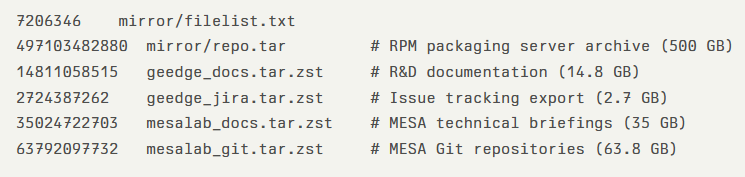
  • The Great Firewall of China (GFW) suffered its largest-ever internal data breach. More than 500 GB of sensitive material—including source code, work logs, configuration files, and internal communications—was exfiltrated and published online. 

    The breach stems from Geedge Networks and the MESA Lab at the Institute of Information Engineering, Chinese Academy of Sciences. 

    The leaked archive reveals the GFW’s R&D workflows, deployment pipelines, and surveillance modules used across Xinjiang, Jiangsu, and Fujian provinces, as well as export agreements under China’s “Belt and Road” framework to Myanmar, Pakistan, Ethiopia, Kazakhstan, and other undisclosed nations. 

    Key Takeaways
    1. 500 GB+ of GFW internals leaked, exposing DPI engines and surveillance code.
    2. 600 GB archive available via BitTorrent/HTTPS; key file repo.tar.
    3. Use isolated VMs, verify hashes, and don’t run unvetted binaries.

    Analysts warn that exposed internals such as the DPI engine, packet filtering rules, and update signing certificates will enable both evasion techniques and deep insight into censorship tactics.

    Key file manifests include:

    Great Firewall of China Sensitive Data Leaked

    For unpacking, use tar -xvf repo.tar on a secure host.

    Operational Security Protocols

    Given the leak’s sensitivity, downloading or analyzing these datasets poses significant security and legal risks. 

    Files may contain proprietary encryption keys, surveillance configuration scripts, or malware-laden installers, potentially triggering remote monitoring or defensive countermeasures. 

    Researchers should adopt stringent operational security protocols:

    • Analyze within an isolated virtual machine or air-gapped sandbox running minimal services. 
    • Employ network-level packet captures and snapshot-based rollback to detect and contain malicious payloads. Always verify file hashes (SHA-256 sums provided in mirror/filelist.txt) before extraction. 
    • Avoid executing binaries or running build scripts without code review. Many artifacts include custom kernel modules for deep packet inspection that could compromise host integrity. 

    Obfuscation techniques discovered in mesalab_git.tar.zst use polymorphic C code and encrypted configuration blocks; reverse-engineering without safe-lab instrumentation may trigger anti-debugging routines. 

    Researchers are encouraged to coordinate with trusted malware analysis platforms and disclose findings responsibly. This unprecedented leak grants the security community an unusual view behind the GFW’s opaque infrastructure.

    Find this Story Interesting! Follow us on Google NewsLinkedIn, and X to Get More Instant Updates.

    The post Great Firewall of China’s Sensitive Data of Over 500GB+ Leaked Online appeared first on Cyber Security News.

    ¶¶¶¶¶

    ¶¶¶¶¶

    ¶¶¶¶¶

    ¶¶¶¶¶

    ¶¶¶¶¶

  • DarkCloud Stealer has recently emerged as a potent threat targeting financial organizations through convincing phishing campaigns. Adversaries employ weaponized RAR attachments masquerading as legitimate documents to deliver a multi-stage JavaScript-based payload.

    Upon opening the archive, victims execute a VBE script that leverages Windows Script Host to initiate a PowerShell downloader hidden in innocuous-seeming image files.

    This initial access vector exploits users’ trust in routine financial correspondence, triggering an automated chain of decoding and decryption steps designed to evade conventional security controls.

    In early September 2025, security teams observed a dramatic uptick in malicious RAR attachments sent to corporate email accounts within the banking sector.

    CyberProof analysts identified that the archive named “Proof of Payment.rar” contains a VBE script which, when executed, calls PowerShell to download an embedded JPG file named universe-1733359315202-8750.jpg.

    Device timeline showing the download activty from user (Source – CyberProof)

    The stealer’s loader is concealed within this image, and the decoding routine extracts the .NET DLL module directly from image pixel data.

    CyberProof researchers noted that the PowerShell script rigorously checks memory offsets to locate a distinct BMP header pattern before carving out the loader DLL.

    The following snippet illustrates the core loop used for scanning the downloaded image bytes:-

    for ($i=0; $i -lt $data.Length - $header. Length; $i++) {
        $match = $true
        for ($j=0; $j -lt $header.Length; $j++) {
            if ($data[$i + $j] -ne $header[$j]) { $match = $false; break }
        }
        if ($match) { $offset = $i; break }
    }

    Once the DLL is reconstructed in memory, the script invokes [Reflection.Assembly]::Load() to execute the loader without ever touching disk.

    Persistence and Credential Theft

    After loading into memory, DarkCloud Stealer establishes persistence by copying a JavaScript payload to the Windows Run registry key under a disguised filename (M3hd0pf.exe masquerading as MSBuild.exe), ensuring execution on every user login.

    The stealer then injects into legitimate processes like MSBuild.exe and mtstocom.exe using process hollowing techniques, enabling it to siphon saved credentials from browser databases such as Chrome’s Login Data.

    Alerts from endpoint detection platforms confirm DPAPI access events and memory mapping into browser processes, revealing attempts to decrypt stored passwords directly in memory.

    Stolen data being sent to remote IPs (Source – CyberProof)

    Finally, stolen data is staged in user directories and exfiltrated via FTP and HTTP channels to dynamic domain clusters (.shop, .xyz), complicating network-based detection.

    Financial institutions are urged to monitor for anomalous VBE/VBS execution, unexpected registry Run key modifications, and JavaScript files in public download folders to rapidly detect and disrupt this insidious campaign.

    Boost your SOC and help your team protect your business with free top-notch threat intelligence: Request TI Lookup Premium Trial.

    The post DarkCloud Stealer Attacking Financial Companies With Weaponized RAR Attachments appeared first on Cyber Security News.

    ¶¶¶¶¶

    ¶¶¶¶¶

    ¶¶¶¶¶

    ¶¶¶¶¶

    ¶¶¶¶¶

  • A recently discovered flaw in LangChainGo, the Go implementation of the LangChain framework for large language models, permits attackers to read arbitrary files on a server by injecting malicious prompt templates. Tracked as CVE-2025-9556, this vulnerability arises from the use of the Gonja template engine, which supports Jinja2 syntax and can be manipulated to perform […]

    The post LangChainGo Vulnerability Allows Malicious Prompt Injection to Access Sensitive Data appeared first on GBHackers Security | #1 Globally Trusted Cyber Security News Platform.

    ¶¶¶¶¶

    ¶¶¶¶¶

    ¶¶¶¶¶

    ¶¶¶¶¶

    ¶¶¶¶¶

  • The Federal Bureau of Investigation (FBI) has released a detailed flash advisory disclosing indicators of compromise (IOCs) and tactics used by two cybercrime groups—UNC6040 and UNC6395—to breach Salesforce customer environments and siphon sensitive data. Coordinated with the Department of Homeland Security Cybersecurity and Infrastructure Security Agency (DHS/CISA), the bulletin aims to equip security teams and […]

    The post FBI Releases IOCs on Cyber Threats Exploiting Salesforce for Data Theft appeared first on GBHackers Security | #1 Globally Trusted Cyber Security News Platform.

    ¶¶¶¶¶

    ¶¶¶¶¶

    ¶¶¶¶¶

    ¶¶¶¶¶

    ¶¶¶¶¶

  • PEARL HARBOR, Hawaii—Robot boats. Counter-drone systems. A prototype Army landing craft. A million dollars in cash prizes. It’s all part of the Army’s effort to overcome logistics challenges in the Indo-Pacific and get new technology in the hands of soldiers more quickly. 

    Experimentation for the Army’s xTech contest started Sept. 9 with sunshirt-clad representatives from HavocAI wheeling small gray autonomous boats down a concrete ramp on Ford Island into the cerulean waters of Pearl Harbor. Soon, the boats were zipping through the harbor, protecting a Maneuver Support Vessel (Light) from an unnamed adversary. A total of 10 companies tested their tech as part of the contest. 

    On Thursday, three winners will take home $35,000 cash prizes, along with feedback from soldiers and technical experts that will help as they pursue a follow-on contract. 

    “We partnered with [U.S. Army Pacific] to identify some of their capability gaps, and invited industry to solve some of those [challenges]. Our goal is really to bring in new industry and offer them a friendly front door to the Army where they can propose their solutions, but also get that direct feedback from stakeholders,” said Jessica Stillman, project manager for the Army’s xTech program

    The 10 competing companies were winnowed from a pool of about 130 that submitted white papers after a call for solutions, Stillman said. About 44 percent of the companies that apply for these contests are new to the Defense Department, and the service tries “to make it as easy as possible” for them throughout the process.

    “A lot of times we keep the problem statements pretty broad, because sometimes industry can tell us what we need,” she said. “You know, we don’t always know what industry is doing, and that’s the value of using our program, because it allows you to do that market research and understand what industry is developing, and can that apply to what the Army needs. It gives the Army the opportunity to bring in new innovation, and new companies into the pipeline, which is really great.”

    Though xTech has run nearly 50 contests so far, this is the first that involves the competitors running scenarios in an experimentation environment, Stillman said. 

    The Pearl Harbor experiments deployed drone boats and counter-drone tech to protect a high-value asset, while experiments at inland Schofield Barracks focused on unexploded ordnance and electronic warfare. 

    The role of “high-value asset” for the exercise was played by a prototype logistics vessel called MSV(L)-01, carrying two Strykers on its reinforced aluminum deck. Vessel Master Chief Warrant Officer 2 Matthew Davis said the crew is testing the vessel to inform low-rate initial production. 

    “Today was kind of a two-birds, one-stone” situation, Davis said: testing the requirements of the vessel along with serving as an asset to be defended by the robot boats. 

    The MSV(L) was built as a replacement for the Vietnam-era Landing Craft Mechanized, for use in the Indo-Pacific, Davis said. 

    “This vessel offers an increased capability and capacity to what we already have,” he said. “The draft is shallower, so fully laden is 82 short tons… With that payload on board, we can still make 23 knots with only five and a half feet of draft,” so even loaded up, it can go straight to the beach and set its ramp on the sand, while other Army vessels require a port. 

    While this iteration of the contest is the first to include experiments, Stillman said the xTech office has three others lined up in the next three months with different commands. 

    “One of the things that senior leaders are focusing on right now is getting the technology into the hands of the soldiers,” she said. “This is the first step.” 

    ]]>

    ¶¶¶¶¶

    ¶¶¶¶¶

    ¶¶¶¶¶

    ¶¶¶¶¶

    ¶¶¶¶¶

  • Future attack drone swarms over Ukraine may come in the form of first-person-shooter drones produced in the country, or the new platforms Western defense companies are putting into the mix. But it’s also possible they’ll be a combination of both—old and new drones working together with minimal human interaction. 

    That’s the vision of a Ukrainian startup called Swarmer, which is pioneering what could be the next evolution of drone warfare: software that can work with virtually any platform. The technology would make a do-it-yourself drone swarm possible, and the swarm as a whole would be able to detect targets and plan operations faster than a human. Serhii Kupriienko, the founder of Swarmer, told Defense One that Ukrainians on the front lines using his company’s software have already conducted more than 70,000 operations. The software already helps on-the-ground teams operate far faster, bringing the number of operators needed to conduct drone missions down from nine people to three: a navigator, a mission planner, and a drone operator.

    Ukraine has produced a highly trained force of first-person UAV drone pilots, and their expertise is sought by other militaries around the world, including the United States’. But Swarmer’s software shows that future drone swarms could mostly pilot themselves, reducing barriers to entry and freeing up operators to do other tasks.

    That also means future drone operations may not require highly trained drone pilots, just regular soldiers who can outline basic mission parameters. The swarm, sharing and analyzing data as a group, would figure out the hard stuff. 

    “Computers can collaborate and can work with each other in a much more efficient way and on a much wider scale than humans,” he said.

    The drones linked together via Swarmer’s software can “exchange the targets, or they can choose the appropriate payload. Different drones can use and carry different kinds of payloads for different targets,” Kupriienko told Defense One. “They can execute complicated scenarios like [target] discovery, and they can give you visual confirmation of the damage [after the strike.] It could be done by the group of drones.” 

    That would enable the drone swarm to learn and adapt to enemy countermeasures more quickly.

    Human pilots are still a part of the process, but they play a hands-off, supervisory role. And the software can be incorporated into a wide variety of platforms, which is critical to Ukraine’s battlefield success, Kupriienko said, because an adversary can more easily take down a drone if they know what specific kind to look for. 

    Now, he said, he’s looking to incorporate the software into larger drones, and refurbished aircraft that have been modified for unmanned operation. But larger drones and planes present a different set of complications. And in the meantime, he’s looking to greatly expand the number of drones that can participate in a single swarm into the hundreds. 

    This is where Swarmer’s work really shows a future path for drone warfare, Kupriienko said. For instance, bringing in ground drones that can communicate information to flying swarms in a way that has so far been missing from most operations.

    “The next big thing is combined arms operations. So we are integrated with different kinds of drones, and we are developing scenarios and applications for combining arms operations with unmanned ground vehicles,” including robotic grenade launchers.

    Sam Bendett, an adviser in Russia studies at the Virginia-based research organization CNA, told Defense One he’s seeing both Russia and Ukraine use more unmanned ground vehicles, or UGVs, for actual assaults. 

    “Often, a small platform with a mine is sent first as a kamikaze vehicle to destroy fortifications or damage positions ahead of an infantry attack. There are also cases of combat UGVs armed with machine guns that conduct assaults ahead of infantry and often in cooperation with FPVs and tactical quadcopters. Several Ukrainian units like Khartia have used combat UGVs to destroy Russian positions and take Russian soldiers prisoner.”

    Still, ground drones suffer from the same drawbacks as every other robot on the battlefield. “If they are using radio channels, then their signals can be potentially jammed. If they are commanded via fiber-optic cables, then the cable can be damaged or cut, disabling the vehicle. The key is to establish a communication between the UGV and the operator that can be impervious to physical or digital countermeasures. Often, UGVs are assisted in their command and control by an overhead UAV that can guide the vehicle to target. We are witnessing this in both Russian and Ukrainian units.”

    The U.S. military is pursuing a wide variety of drone swarm concepts, some of which were on display last month at an Army T-REX exercise in Indiana. One of the big lessons to come out of that is that “autonomy” is not a one-size-fits-all solution. The more sensor data any particular drone has to work with—whether from other drones, satellites, infantry or ground vehicles—the better they will perform, especially in concert with one another.

    Speaking at a recent industry event in Washington, D.C., Undersecretary of Defense for Research and Engineering Emil Michael said lessons from Ukraine are helping the U.S. military rethink long-held positions on what can and cannot be automated, as well as the role of space-based communications. 

    “We’ve seen what space communications can provide in terms of communicating all around the world, the low latency and high bandwidth,” he said. “We’ve seen drones swarming together, acting in coordination, which has changed how we think.”

    ]]>

    ¶¶¶¶¶

    ¶¶¶¶¶

    ¶¶¶¶¶

    ¶¶¶¶¶

    ¶¶¶¶¶

  • Emerging in early September 2025, the Yurei ransomware has swiftly drawn attention for its novel combination of Go-based execution and ChaCha20 encryption.

    First documented on September 5 when a Sri Lankan food manufacturer fell victim, the threat actor behind Yurei adopted a double-extortion model: encrypting files while exfiltrating sensitive data for additional leverage.

    Within days, two more victims in India and Nigeria were publicly listed, underscoring the operator’s rapid expansion.

    Unlike many sophisticated groups that develop custom toolsets, Yurei’s codebase traces back to the open-source Prince-Ransomware project, raising questions about the skill level and resources of the attackers.

    At its core, Yurei leverages Go’s concurrency features to enumerate all drives in parallel and encrypt files with the ChaCha20 algorithm.

    For each file, a new random ChaCha20 key and nonce are generated, then encrypted using ECIES with the attacker’s public key.

    The resulting ciphertext, key, and nonce are concatenated with delimiters:-

    // Generate random key and nonce
    key := generateChaCha20Key()
    nonce := generateNonce()
    // Encrypt file content
    encryptedData := chaCha20Encrypt(content, key, nonce)
    // Protect key and nonce with ECIES
    protectedKey := eciesEncrypt(key, publicKey)
    protectedNonce := eciesEncrypt(nonce, publicKey)
    // Store encrypted file
    store := protectedKey + "||" + protectedNonce + "||" + encryptedData

    Check Point researchers noted that Yurei retains symbols in the binary, a mistake inherited from the Prince-Ransomware builder, which did not strip debugging information.

    This oversight provided analysts with clear function names such as Yurei_encryption_generateKey and Yurei_filewalker_EncryptAllDrivesAndNetwork, streamlining the reverse-engineering process.

    Shadow Copy Recovery and Defensive Implications

    Despite this, Yurei’s use of Go complicates detection for some legacy antivirus products, illustrating how language choice can impact defensive measures.

    Yurei ransomware site on September 5 (Source – Check Point)

    Following successful encryption, Yurei attempts to set a custom wallpaper via PowerShell, though the absence of a valid URL causes the command to fail, resulting in a blank background.

    The embedded PowerShell snippet mirrors that of its Prince-Ransomware predecessor:-

    (New-Object System.Net.WebClient).DownloadFile('<WallpaperURL>', "$env:TEMP\Wallpaper.png")
    Add-Type -TypeDefinition @"
    using System;
    using System.Runtime.InteropServices;
    public class Wallpaper {
        [DllImport("user32.dll", CharSet=CharSet.Auto)]
        public static extern bool SystemParametersInfo(int uAction, int uParam, string lpvParam, int fuWinIni);
    }
    "@
    [Wallpaper]::SystemParametersInfo(20, 0, "$env:TEMP\Wallpaper.png", 3)
    Ransom note (Source – Check Point)

    In the context of defensive strategies, Yurei’s failure to remove Volume Shadow Copies reveals a critical weakness.

    Organizations with VSS enabled can recover files without paying ransom, although leaked data remains at risk.

    The combination of rapid encryption, data exfiltration, and half-baked persistence techniques reflects a low-effort but effective operation.

    As Yurei continues targeting diverse sectors, security teams are urged to monitor for the distinct file extension .Yurei, enforce strict egress controls, and validate VSS snapshots to mitigate the impact of this emerging threat.

    Boost your SOC and help your team protect your business with free top-notch threat intelligence: Request TI Lookup Premium Trial.

    The post New Yurei Ransomware With PowerShell Commands Encrypts Files With ChaCha20 Algorithm appeared first on Cyber Security News.

    ¶¶¶¶¶

    ¶¶¶¶¶

    ¶¶¶¶¶

    ¶¶¶¶¶

    ¶¶¶¶¶