The subsurface findings could transform how scientists study volcanoes across the solar system — including those on Earth.
Astronomers have found strong evidence for a Jupiter-mass object orbiting a brown dwarf, potentially marking the first convincing detection of a moon beyond our solar system.
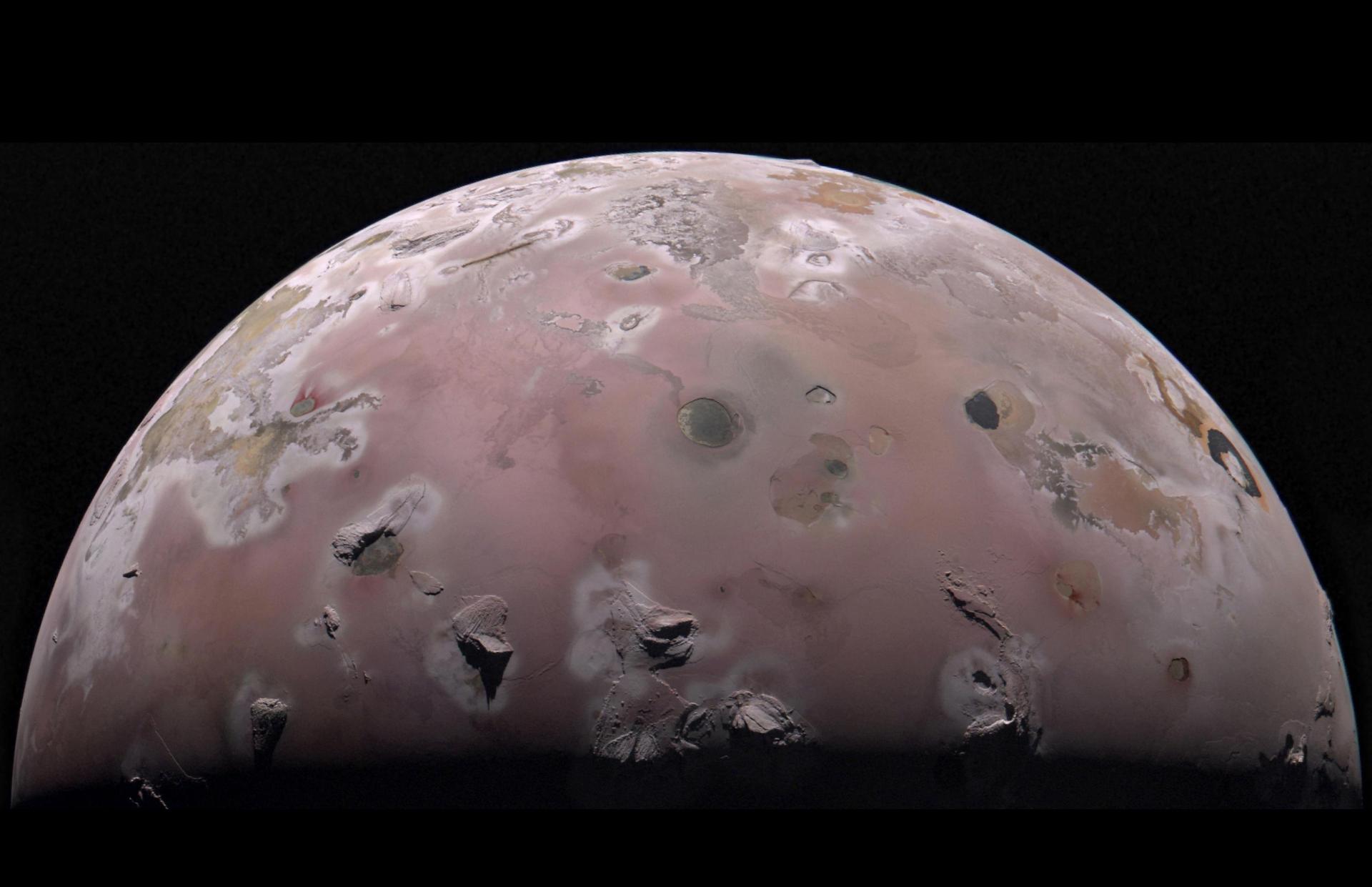
NASA’s Juno mission has provided the first measurements of the temperature below the surface of Jupiter’s moon Io, revealing significant heating within the shallow subsurface of the most volcanically active world in the solar system. Collected during two close flybys, the data also shows that most of Io’s surface is remarkably smooth and composed of […]
NASA’s Juno spacecraft captured a photo of Jupiter’s moon Thebe.
Lightning on Jupiter may pack more than 100 times the power of Earth’s bolts, and may prove one million times stronger, a new study finds.
…
Never-before-seen temperature and ion density measurements reveal that the effect of Jupiter’s moons on its aurora are more complicated than scientists thought.
…
Ganymede’s auroras splinter into small, bright patches — structures that mirror features seen in Earth’s own auroral displays.
…
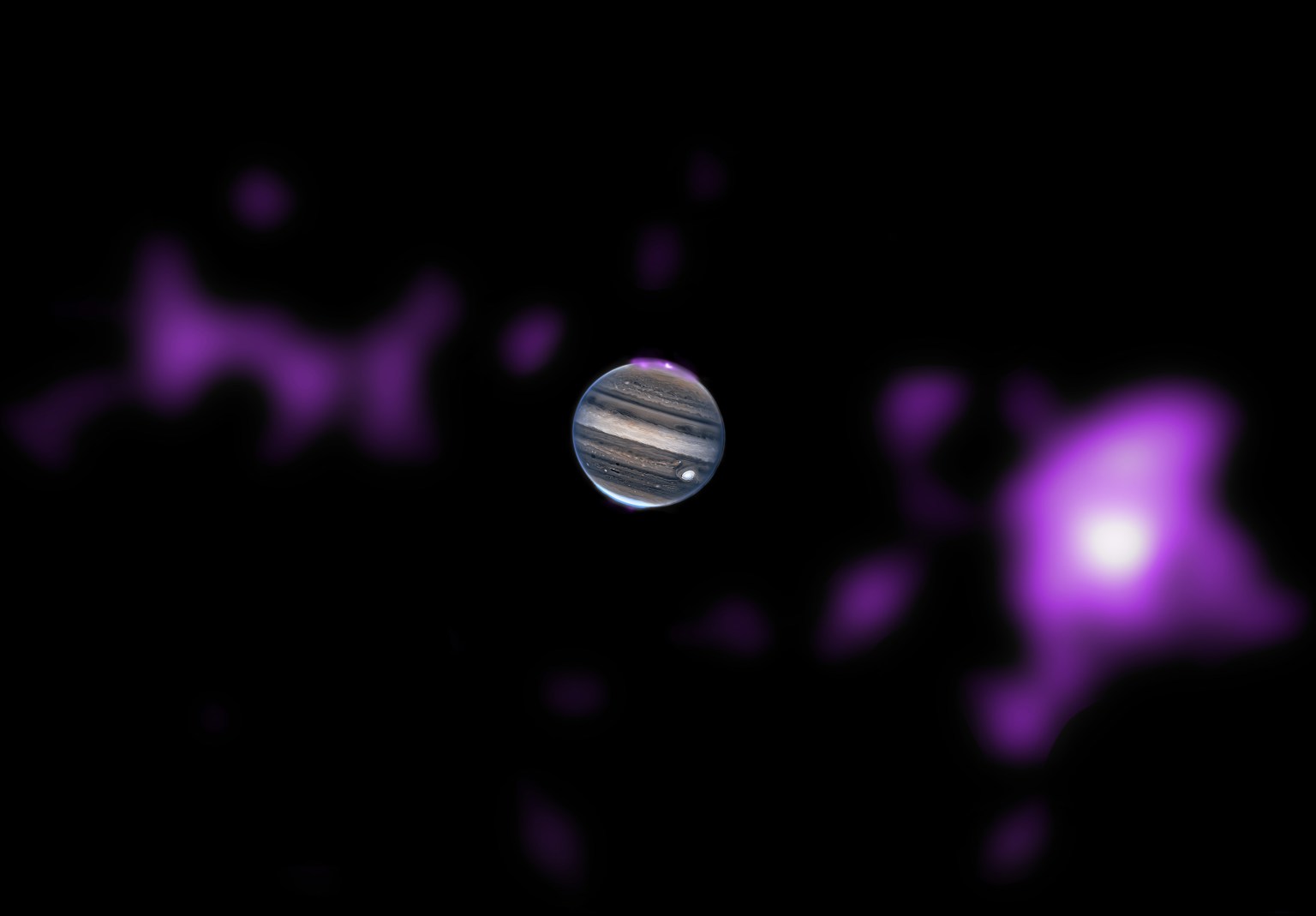
In late February, people in the Northern Hemisphere can look up for a special sight : Six planets will all be visible from clear and dark night skies. New sonifications from NASA’s Chandra X-ray Observatory released [day of week] will help commemorate this latest “planetary parade.” Because the planets in our solar system travel around […]
Jupiter may be a bit more petite than expected, and that could have a big impact on how scientists model the mysterious interior of the giant planet.
…
“What makes the event even more extraordinary is that it did not involve a single volcano, but multiple active sources.”
…