Tower Semiconductor has announced a dual-track expansion of its 300mm silicon photonics, silicon germanium, and advanced packaging operations in Japan
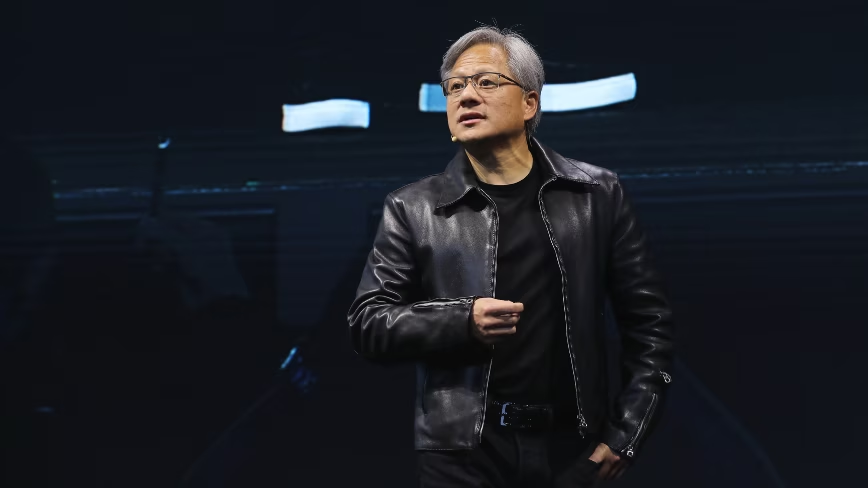
The firms powering the AI boom now want a piece of the mobile network. Nokia says it has built the industry’s first commercial AI-RAN platform, together with Nvidia, calling it the biggest shift in radio in decades. RAN stands for radio access network,…

Apple built a trillion-dollar business on chips it designs itself. It cannot design the ones its AI needs fast enough, so it is going shopping. The iPhone maker is hunting for AI chip acquisitions, The Information reported. In recent months it has talk…
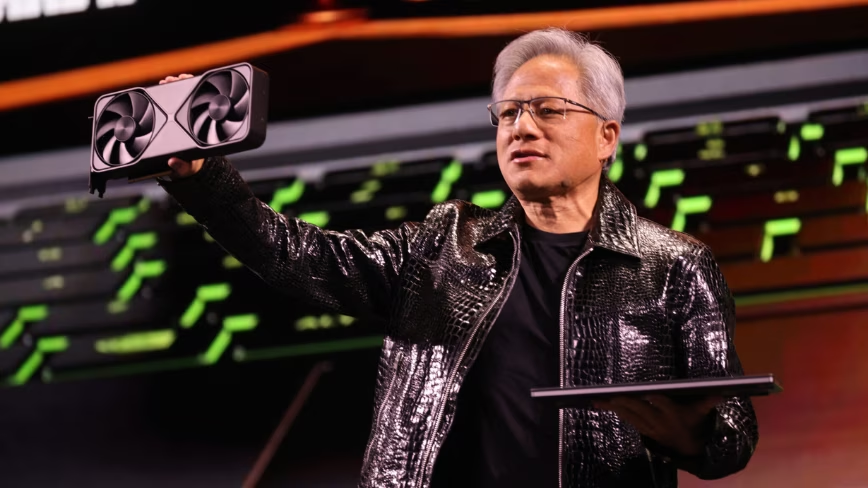
Nvidia and Sega go back 30 years. Jensen Huang flew to Tokyo to thank the games maker for a $5m investment that saved his company from bankruptcy in 1995. “If not for what Sega did for Nvidia, Nvidia would not be here today.” That is Jensen Huang, chie…
Intel is using ASML’s High-NA EUV tools to pattern select Panther Lake layers, marking the technology’s first use in high-volume logic production
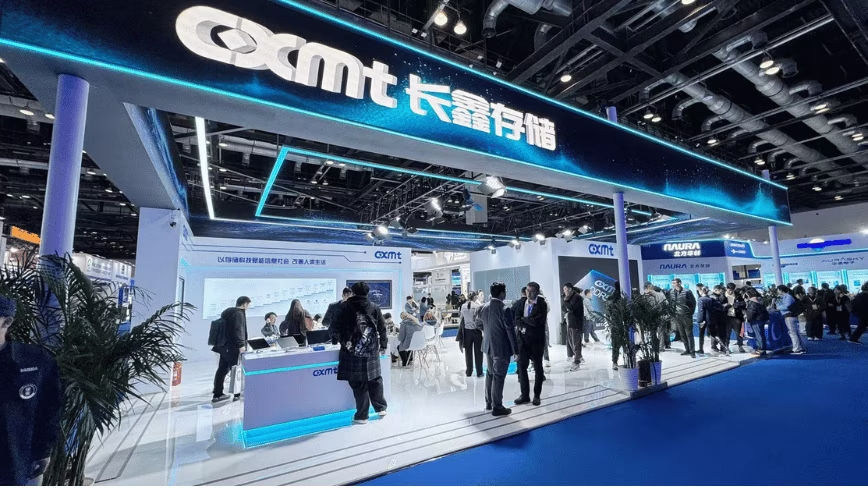
China’s biggest memory chipmaker is about to test the public markets. ChangXin Memory Technologies, known as CXMT, has priced its Shanghai IPO at 8.66 yuan ($1.28) a share, the South China Morning Post reported. The sale will raise about 57.9 billion y…
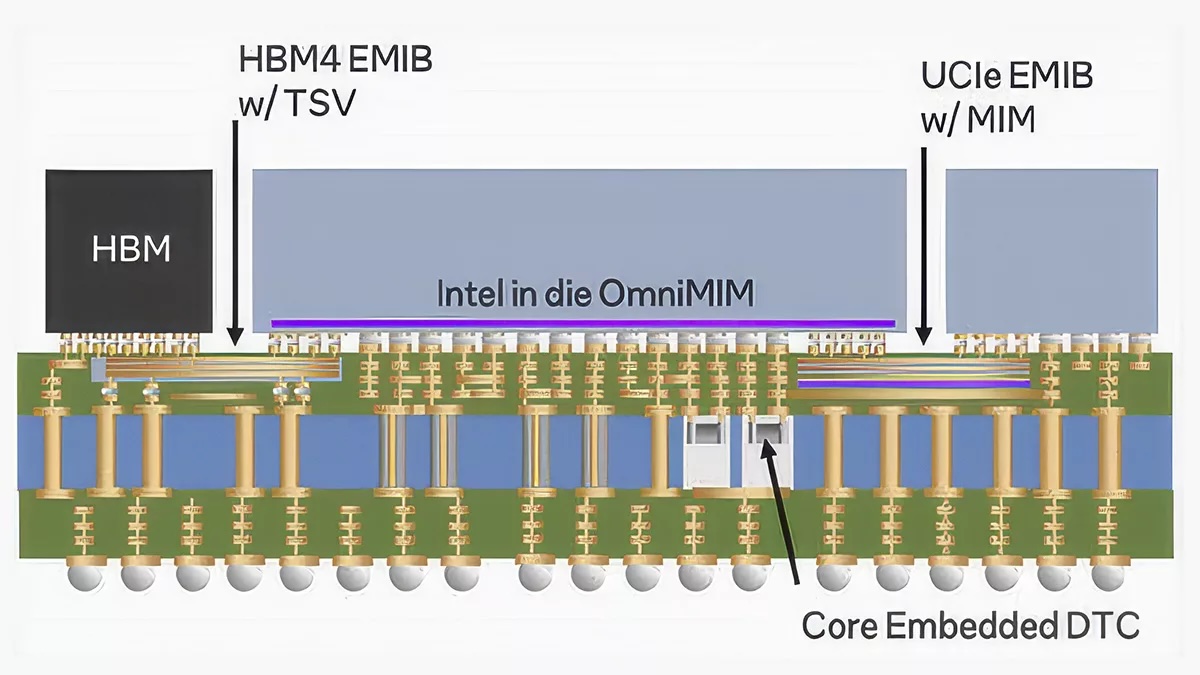
Google has reportedly chosen Intel’s EMIB-T over TSMC’s CoWoS-L for its next-generation TPU, codenamed Humufish. But will Google be alone in its alleged decision?

Reflection AI has locked in more computing power. The US startup signed an AI compute deal worth more than $1bn with Nebius, the Amsterdam-based cloud provider, according to Bloomberg. The agreement runs through 2029. It gives Reflection access to Nvid…
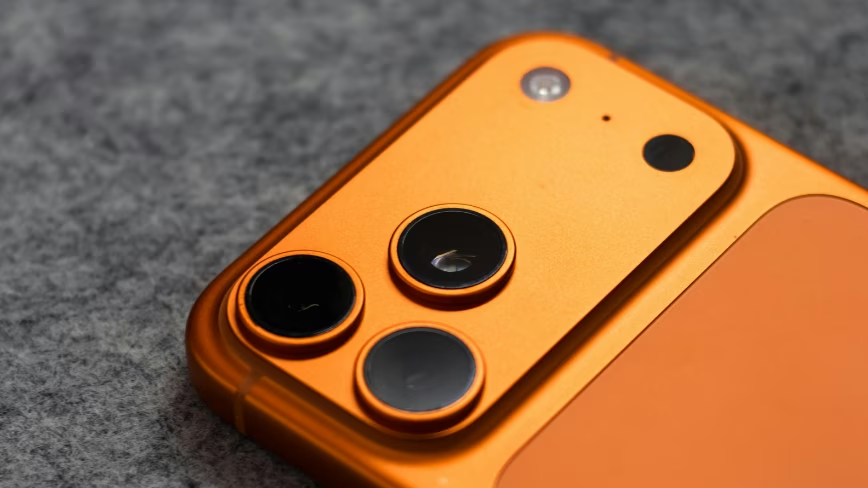
Apple is in early talks with PrismML, a startup that shrinks large AI models to run directly on a phone. The company’s on-device AI pitch could help Apple keep more of Siri’s work off the cloud. PrismML chief executive Babak Hassibi told CNBC that Appl…
Running until 2035, the $250 billion spending target is attached to a goal of making 40% of Micron’s DRAM in the U.S. by the mid-2030s.