Using continuous imagery from NASA’s PUNCH (Polarimeter to Unify the Corona and Heliosphere) mission, scientists predicted the near-Earth arrival of a solar eruption to within 30 minutes in an initial proof of concept test. The results, presented Tuesday at the Committee on Space Research Scientific Meeting and under review at the journal Space Weather, could […]

Each time the Moon covers the Sun during a total solar eclipse — darkening daytime skies and briefly revealing the Sun’s ethereal outer atmosphere, the corona — it presents new opportunities to better understand our star and its influence on Earth. On Wednesday, Aug. 12, as the next total solar eclipse sweeps over Greenland, Iceland, […]
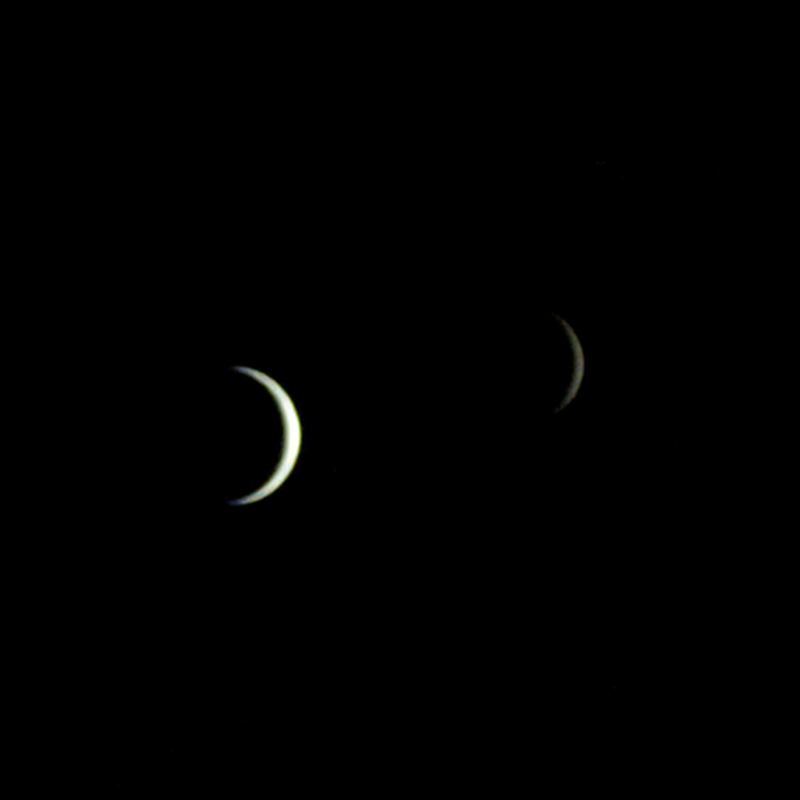
On July 3, one of NASA’s two Mars-destined ESCAPADE (Escape and Plasma Acceleration and Dynamics Explorers) spacecraft captured photos of Earth and the Moon in visible and thermal infrared light. At the time, the spacecraft was 363,250 miles (584,600 kilometers) from Earth and 115,600 miles (186,100 kilometers) from the Moon, making the Moon appear relatively […]
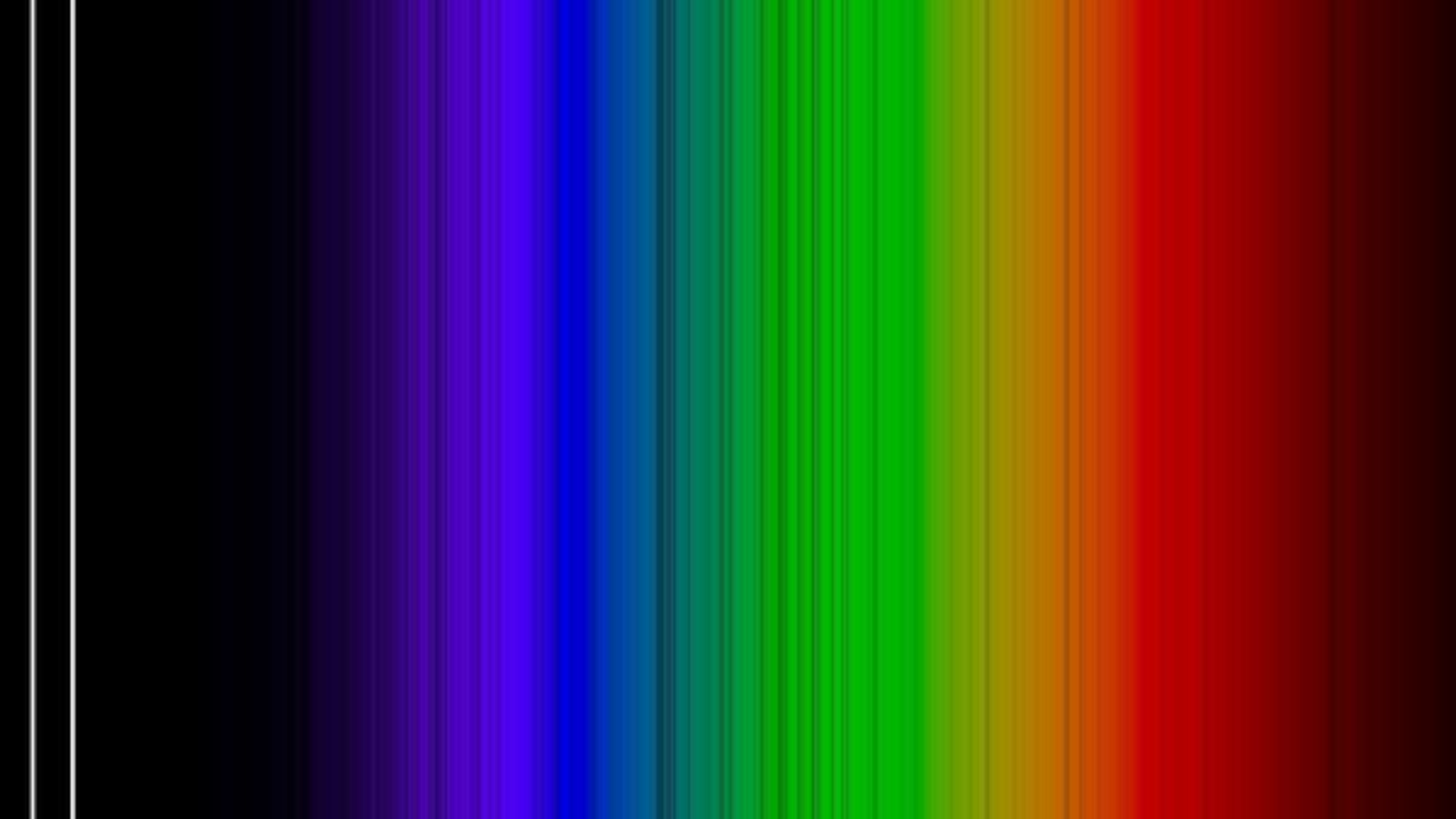
Scientists say the sun has a little more silver than we thought.
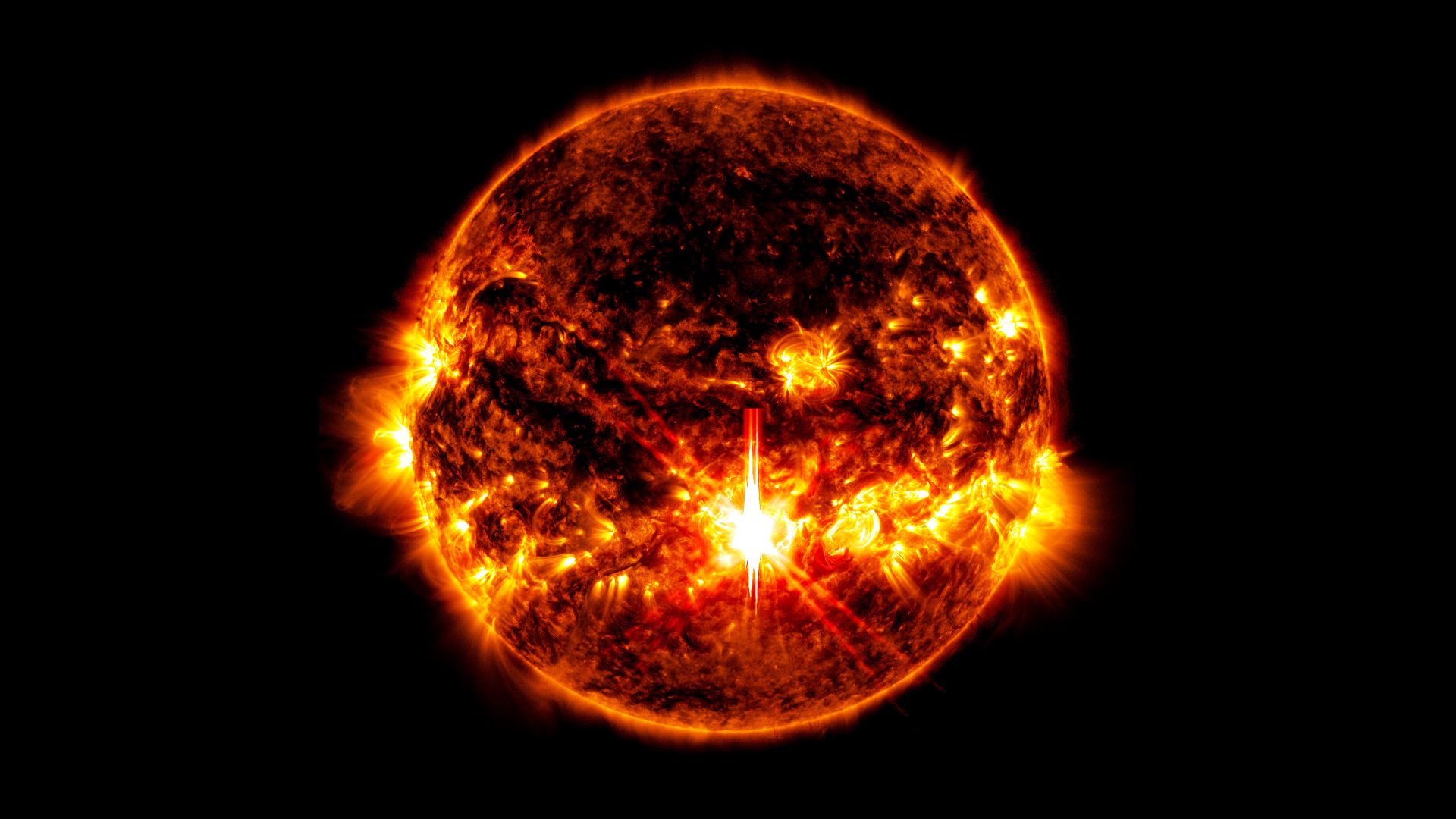
A new study suggests the most extreme solar storms to strike Earth could have greater impacts on satellites, power grids and communications than previously thought.
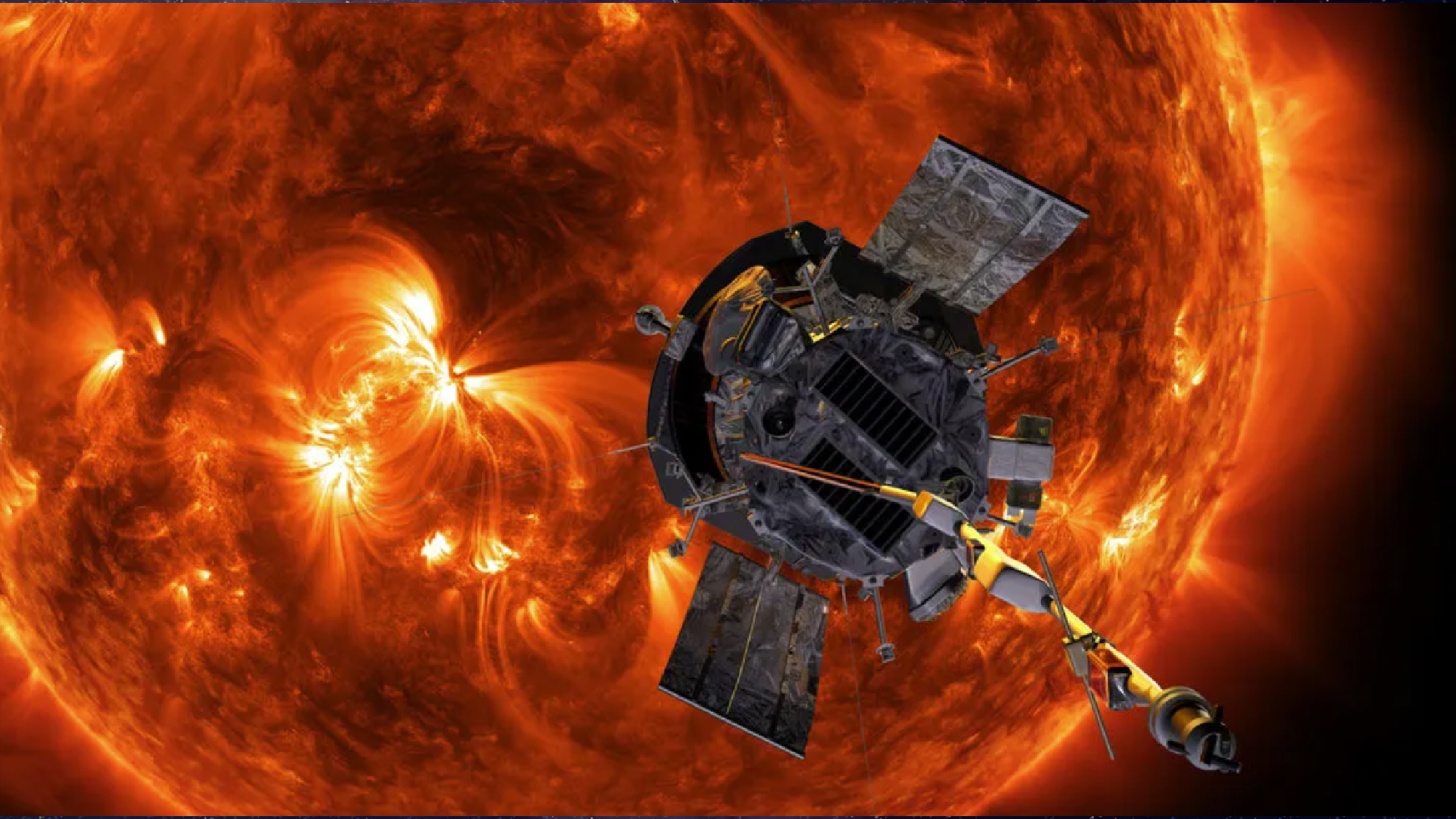
NASA’s Parker Solar Probe has found charged grains of dust being carried on magnetic plasma waves in the Sun’s outer atmosphere, providing a new clue to the mystery of the Sun’s corona is so hot.
NASA has selected Rocket Lab to provide the launch service for both the agency’s PolSIR (Polarized Submillimeter Ice-cloud Radiometer) and Total and Spectral Solar Irradiance Sensor-2 (TSIS-2) missions. The two selections are part of NASA’s Venture-Class Acquisition of Dedicated and Rideshare (VADR) launch services contract. This contract allows the agency to award fixed-price indefinite-delivery/indefinite-quantity launch […]
These results could benefit space weather forecasts.
Researchers analyzing crimson auroras over Japan found the glowing displays stretched hundreds of miles higher into Earth’s atmosphere than expected, challenging long-held assumptions about the strength of geomagnetic stor…

On May 21, ground controllers powered down NASA’s AWE (Atmospheric Waves Experiment) instrument, bringing the data collection phase of the mission to a successful and scheduled end, surpassing its planned two-year mission. Installed on the exterior of the International Space Station since November 2023, AWE studied atmospheric gravity waves, which are giant ripples in the […]